Author Archives: admineb5

Free EB-5 Project Evaluation

EB-5 Adjustment of Status: Form I-944 Eliminated

EB-5 Adjustment of Status Form I-944 Eliminated

Though most foreign nationals who participate in the EB-5 Immigrant Investor Program do so from their home country, a number of applicants make their EB-5 investment from within the United States. These investors already hold valid non-immigrant visas—such as a student visa or an H-1B work visa—and use an EB5 investment to obtain permanent residency rights in the United States, allowing them to stay indefinitely even after their original visa expires.

Whereas overseas EB-5 investors apply for their U.S. green card through the National Visa Center and their local U.S. embassy or consulate, those already residing in the United States forgo the visa interview process and simply file Form I-485 to adjust their U.S. immigration status. Of course, since immigration is always a complicated process, the adjustment of status process also comes with a mountain of bureaucracy, and traditionally, foreign nationals wishing to change their U.S. immigration status have also been required to submit Form I-944.

What Is Form I-944?

Form I-944, clocking in at a whopping 18 pages, was introduced in February 2020 by United States Citizenship and Immigration Services (USCIS) to be filled out by any foreign national requesting an adjustment of their status. The form, meant as a declaration of self-sufficiency, was intended to show that the applicant would not burden the U.S. social welfare system. It therefore required a library of documents regarding the foreign national’s finances and assets, rendering the otherwise simple adjustment of status application complicated and time-consuming.

The Trump administration expanded the legislation to encompass a larger number of social welfare benefits, including Medicare and federal housing assistance, but the expansion was met with a deluge of lawsuits that alleged a federal law violation. The result was the blocking of the legislation, which the Trump administration filed an appeal against. However, on March 9, 2021, before the U.S. Supreme Court could consider the appeal, the Biden administration announced its stance against the appeal. In fact, it also announced the complete elimination of Form I-944 for adjustment of status applicants. With the U.S. government no longer defending the regulation, the Supreme Court dismissed the numerous pending appeals, so now, foreign nationals looking to adjust their immigration status need not worry about the declaration of self-sufficiency.

The Advantages for EB-5 Investors

Given that an EB5 investment requires a minimum of $1.8 million (or the lower investment amount of $900,000, if the project is in a targeted employment area, a.k.a. TEA), the average EB-5 investor would be unaffected by the I-944 petition. An individual with the means to engage in an EB-5 investment should hardly be affected by this ruling—or at least, that’s what many think.

But in fact, many EB-5 investors are not investing their own wealth but rather EB-5 investment capital donated by relatives. For example, a popular path for many foreign investor parents is to gift their child the required sum to make an EB5 investment, meaning the investor has enough funds to participate in the program but may not have a lot of money outside of this gift. This scenario is particularly popular for international students in the United States, and the previous I-944 requirement led to a hairy situation for students who had, for example, applied for health care subsidies through a state health insurance marketplace.

Student EB-5 investment participants can breathe a sigh of relief with the Biden administration’s announcement of the elimination of the I-944 requirement, as it makes their path to an EB-5 visa dramatically simpler. As of March 9, 2021, I-485 petitions are to be filed without Form I-944, and if an adjustment of status applicant has already filed an I-944 petition, USCIS will disregard it in its adjudication.

Free EB-5 Project Evaluation

Changes to the EB-5 Program Likely After June 30, 2021: Apply Now

Changes to the EB-5 Program Likely After June 30, 2021 Apply Now

Throughout most of its more than 30-year history, the EB-5 Immigrant Investor Program has leaned on the ever-popular EB-5 Regional Center Program to help guide foreign nationals through the EB-5 investment process and maximize the job creation potential of the program while protecting investors’ interests. Given the overwhelming success of the regional center program and the economic stimulation it has provided to the United States, it may surprise prospective investors to learn that the regional center program has not been made permanent. Instead, it is subject to continual reauthorizations from Congress, which can cause headaches for EB5 investment stakeholders.

Traditionally, the regional center program has been extended in conjunction with a wider government spending bill, which has all but guaranteed its reauthorization. That has changed with Congress’s December 2020 decision to divorce the popular program from the spending bill, setting an EB-5 Regional Center Program sunset date of June 30, 2021. Without the security of the larger bill to back it up, the regional center program must now stand on its own merits to gain reauthorization—and industry leaders fear it will fail without EB-5 reform.

Fortunately, bipartisan duo Senators Chuck Grassley and Patrick Leahy have proposed the EB-5 Reform and Integrity Act, which proposes a wide range of reform measures for the EB-5 program, including strengthening security and anti-fraud measures, more stringently protecting investors’ interests, and reauthorizing the regional center program through 2024. The downside of the proposed legislation is that it could usher in stricter application requirements, making it harder for new applicants to initiate an EB5 investment. But there’s still time left until June 30, 2021: if you manage your time carefully, you can submit your I-526 petition before the June 30 deadline.

Identify a Reputable Regional Center

It’s not mandatory to make an EB-5 investment through a regional center, but it is recommended due to the numerous advantages regional center investment offer. Specifically, with a regional center investment, EB-5 applicants can enjoy a higher level of freedom, involving themselves in the management of the new commercial enterprise (NCE) simply by signing on as a limited partner. Even more importantly, those with EB5 investments through regional centers can count indirect and induced jobs in their job creation calculations, making it easier to obtain a U.S. green card.

The access to highly experienced EB-5 experts with a duty to maximize investors’ chances of immigration success cannot be understated, either. This makes selecting a reputable, trustworthy EB-5 center imperative. When browsing regional centers, reach out and ask their staff a wide array of questions to ascertain the quality of the organization.

Hire an Immigration Lawyer

Attempting the EB-5 investment process without an EB-5 immigration attorney is highly unadvisable. Hiring an immigration lawyer is recommended even for those making their EB5 investment through a regional center—and not just any immigration lawyer will do. Given the specific, complicated legislation surrounding the EB-5 program and its fundamentally different nature from conventional immigration programs, an EB-5 investment necessitates the expert advice of an immigration attorney specialized in EB-5 immigration. When looking for an EB-5 immigration lawyer, ask questions regarding the length of time they’ve served in the EB-5 industry, how many EB-5 investors they have represented in the past, and their track record of approved I-526 and I-829 petitions.

Gather Documentation for the I-526 Petition

An I-526 petition, which is the first petition an EB5 investment participant files with United States Citizenship and Immigration Services (USCIS), requires not only personal information about the investor and any accompanying family members but also data on their chosen EB-5 project and their EB-5 capital. Most daunting for most EB-5 investors is the requirement to prove that their EB-5 funds were obtained lawfully, which can be a time-consuming and intensive process, especially if an investor must trace funds back several years. In some cases, the investor may no longer possess the applicable documentation, requiring them to request it from companies or government bodies.

Working with an EB-5 immigration attorney throughout the source-of-funds process is particularly crucial, as an experienced EB-5 lawyer understands what USCIS is looking for and which of an investor’s available fund sources will be easiest to demonstrate. The advice an immigration lawyer provides could be critical in the document-gathering stage of I-526 preparation. Given the complexity of sourcing one’s legally obtained funds, EB-5 investors who wish to apply before June 30, 2021, should start working on their applications immediately.

Free EB-5 Project Evaluation

EB-5 Reform Needed to Ensure National Security

EB - 5 Reform Needed to Ensure National Security (1)

Calls for reform to the United States’ popular residency-by-investment program, the EB-5 Immigrant Investor Program, have grown louder and more numerous over the years, especially as United States Citizenship and Immigration Services (USCIS) issues continue to accumulate and EB-5 backlogs grow ever longer. EB-5 investment stakeholders have become particularly vocal about the need for EB-5 reform in light of the June 30, 2021, sunset date of the EB-5 Regional Center Program, which is in danger of termination if the industry fails to enact sufficient reform.

EB-5 reform is necessary for a number of reasons—the interests of honest investors and project developers must be protected, while malicious actors and fraudulent activity must be detected and eliminated. Strengthened integrity measures could improve the public image of the EB-5 program, which is routinely dragged through the dirt by the media. EB5 investment stakeholders have also been pushing for permanent or at least long-term reauthorization of the regional center program to safeguard the EB-5 program’s job-creating and economy-stimulating capabilities further into the future.

But those aren’t the only reasons—according to Senator Guy Reschenthaler, a Republican representative in Pennsylvania, reform is necessary to curb national security vulnerabilities that can be exploited by the United States’ foreign adversaries, especially China.

How the Chinese Communist Party Could Exploit the EB-5 Program

The massive EB-5 demand from Chinese investors has long been a hallmark of the program, which has only in the late 2010s started to see more diversity in the nationalities of investors. In fact, between 2015 and 2018, roughly 80% of the EB-5 visas available each year—around 10,000—have been issued to Chinese nationals. This in itself is not suspicious: China houses the world’s largest population, and a Chinese national can hardly be blamed for the desire to escape China’s authoritarian government.

However, according to a letter penned by Reschenthaler and fellow Republican senator Jim Jordan on June 15, 2020, evidence of possible Chinese Communist Party (CCP) abuse of the EB-5 program has been mounting. The CCP may be pursuing EB-5 investments as a simple and relatively quick means of obtaining U.S. permanent resident status for its members, undermining U.S. national security. The letter requested a U.S. Government Accountability Office (GAO) investigation into the extent of the abuse by the CCP.

With U.S. green cards, CCP members could move freely about the United States, covertly infiltrating everyday U.S. society. Under this cover, spies could steal intellectual property and state secrets, undermine U.S. democratic processes, and more. The inadequate integrity measures of the EB-5 program as of March 2021 constitute a warm invitation to CCP members and other malicious actors who wish to interfere with the U.S. way of life.

How EB-5 Reform Could Strengthen National Security

EB-5 reform could introduce improved resources and standards for detecting exploitation by nefarious actors, especially the CCP, better thwarting attempts from foreign adversaries to infiltrate the United States. USCIS already has the ability to evaluate an EB5 investment petition for national security concerns, but regardless of their findings, they cannot then deny a petition solely on national security grounds. This oversight in EB-5 integrity, which leaves the door open to abuse and could undermine the security of the United States, must be addressed in EB-5 reform.

More funding for USCIS would also go a long way in protecting the national security interests of the United States in EB-5 investment matters. Like many businesses and individuals alike, USCIS suffered financial hardship in 2020 and even announced its intent to furlough more than 13,000 employees—more than 70% of its workforce. Fortunately, emergency funding saved these jobs and kept the immigration body afloat, allowing USCIS to plough forward with adjudications.

But USCIS’s financial uncertainty remains. The agency has struggled to gather the necessary funds to support its work, even though a thriving USCIS is critical to U.S. national security. In addition to reform to the EB-5 program, proper funding and support for USCIS is crucial to maintaining secure borders and identifying fraud or malicious actors while remaining a welcoming beacon to ambitious immigrants worldwide. A well-funded and -equipped USCIS is also beneficial for EB-5 investment participants, as it allows the agency to process I-526 petitions more expediently.

EB-5 reform has already been proposed—Senators Chuck Grassley and Patrick Leahy are pushing a bill that would introduce widespread changes to the EB-5 program, including strengthened integrity measures, stronger protections for honest EB5 investment participants and project developers, and long-term reauthorization for the regional center program. While some industry leaders have voiced concerns that the proposed reform doesn’t go far enough, it’s a strong start, and it’s just what the EB-5 world needs.

Consular processing Free EB-5 Project Evaluation

Why EB-5 Adjudication Times May Speed Up Dramatically

Consular processing

Lengthy processing times for I-526 petitions (the first visa petition filed by EB-5 investors) have long plagued the EB-5 Immigrant Investor Program, leaving qualified investors in limbo for years waiting for their conditional permanent resident status. For those unfortunate to hold a passport from a backlogged country—as of January 2023, China and India—waits are even longer.

Despite the ever-growing processing delays, United States Citizenship and Immigration Services (USCIS) has done little to address inefficiency, instead focusing on staying afloat amid financial difficulties.

The long processing times have been turning prospective participants away from pursuing an EB-5 investment, and it’s understandable—the time and effort required for an EB5 investment may not be worth it if an investor is satisfied with Canada’s or Australia’s residency-by-investment program or if they have children in danger of aging out of eligibility for a U.S. Green Card.

However, in 2023, the situation is looking up for EB-5 processing times, and it may just be the perfect time to jump into an EB-5 investment.

The EB-5 Immigrant Investor Program

The EB-5 Immigrant Investor program is one of the fastest and most reliable ways to receive a U.S. Green Card. In exchange for one passive qualifying investment, a foreign investor, their spouse, and all unmarried children under the age of 21 can receive permanent resident status in the United States.

The minimum EB-5 investment in a new commercial enterprise (NCE) or job-creating entity (JCE) is $1,800,000. If the chosen EB-5 project is located in a targeted employment area (TEA), meaning a rural area or an area of high unemployment, then the minimum investment is lowered to $800,000.

Through the EB-5 program, the immigrant investor and their eligible family members can live, work, and study anywhere in the United States without restriction, and without an employer or educational visa sponsor. They can even apply for U.S. citizenship after holding a Green Card for five years.

What is an I-526 Petition?

An I-526 or I-526E petition is essentially an investor’s “application” to qualify for the EB-5 immigrant visa process. This form, along with much supporting documentation, is to prove that the investor has made the minimum EB-5 investment in a qualifying new commercial enterprise (NCE) and that the NCE used their lawfully-sourced EB-5 capital to create a minimum of 10 full-time jobs for U.S. workers.

The EB-5 Reform and Integrity Act of 2022 split the formerly unified EB-5 immigrant petition into two separate petitions, depending on the nature of the foreign national’s capital investment:

  • Form I-526, Immigrant Petition by a Standalone Investor, is for direct EB-5 investors.
  • Form I-526E, Immigrant Petition by a Regional Center Investor, is for immigrant investors who pool their investment with other EB-5 investors through a USCIS-approved regional center.

A significant 94% of successful EB-5 Green Card applicants are regional center investors, according to a recent study of USCIS processing data.

Direct investors may only count W-2 employees of the NCE towards their job creation requirement. Regional center investors may count both direct employees and indirect jobs sustained through econometric modeling.

Once an immigrant investor’s I-526 or I-526E petition is approved, the investor, their spouse, and all unmarried children under the age of 21 will receive a two-year U.S. Green Card, granting them conditional permanent resident status in the United States.

Conditional permanent resident status lasts for two years. During this time, investors may live, work, or study anywhere in the United States. Their EB-5 investment must remain “at-risk” and the 10 or more jobs created must be sustained for a minimum of two years.

What is an I-829 Petition?

During the last 90 days of the two-year conditional permanent resident status, an immigrant investor’s immigration attorney files their I-829 petition with USCIS.

  • Form I-829 is a petition to remove conditions from an investor’s conditional Green Card, and grant them full permanent resident status in the United States.

In order to do this, investors must compile supporting documentation to prove that their lawfully-sourced EB-5 investment actually did create and sustain 10 or more full-time jobs for U.S. workers, and that the investment itself did remain “at-risk” the entire time, as planned in the investor’s I-526 petition.

Once the I-829 petition is approved, an investor, their spouse, and all unmarried children under the age of 21 will receive full U.S. Green Cards, granting permanent resident status in the United States.

Immigrant investors may live, work, or study anywhere in the United States, without restriction, permanently. They will also have the option to become a U.S. citizen, only five years after establishing conditional permanent residency.

archive, boxes, shelf

Estimated Processing Times Don’t Match Historical Average Processing Times

USCIS publishes up-to-date and historic processing times for nearly all forms associated with the EB-5 program on its website. However, those who aren’t familiar with how USCIS presents its data should be warned: these processing times may not mean what you think.

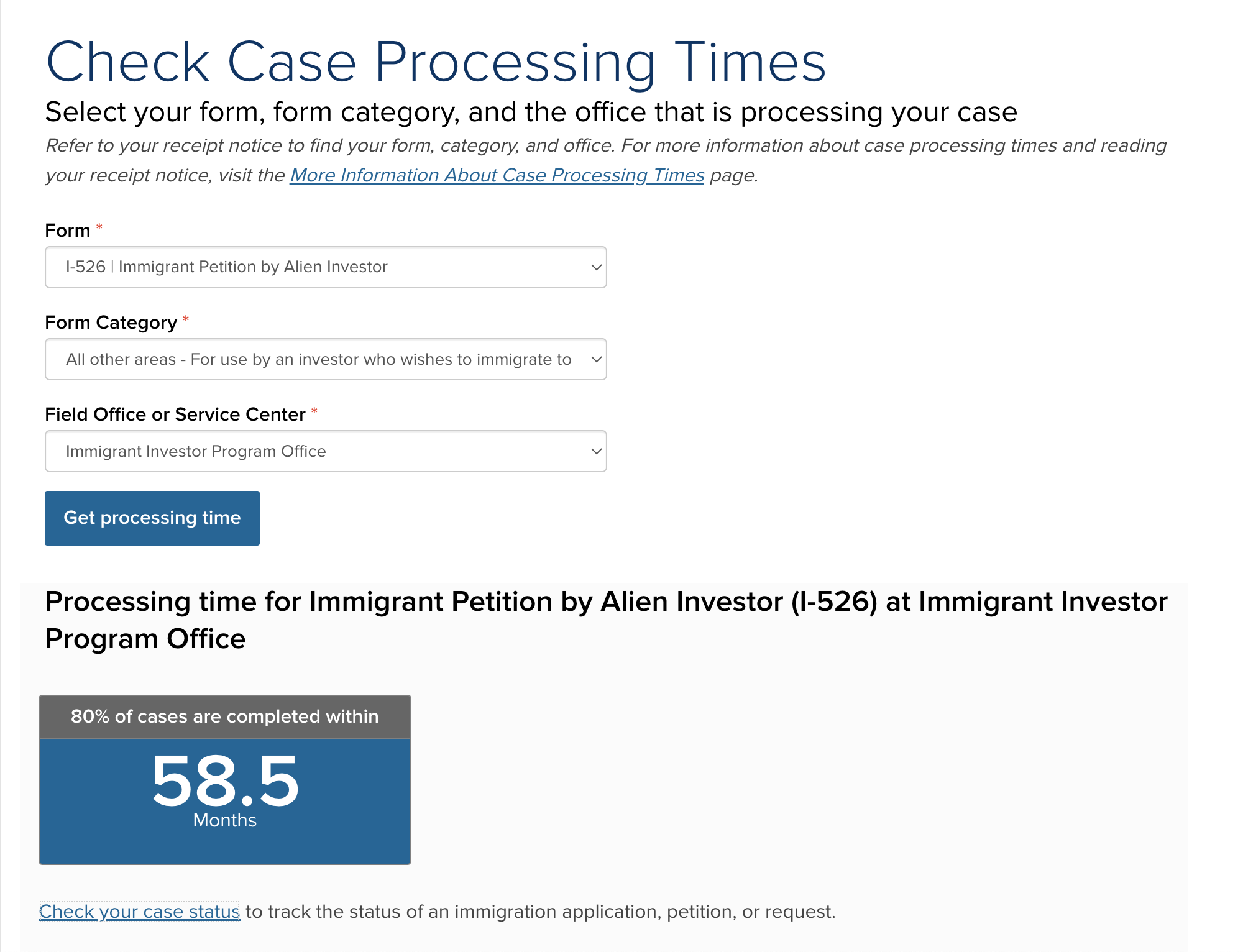
When an investor first searches for current I-526 processing times on the USCIS website, they will come across this number “58.5 months”, current as of January 2023.

This is not the average processing time. This is not the median processing time. This number represents the time it took to process 80% of all I-526 petitions adjudicated in the previous six months.

Eb5 visa

EB-5 investment

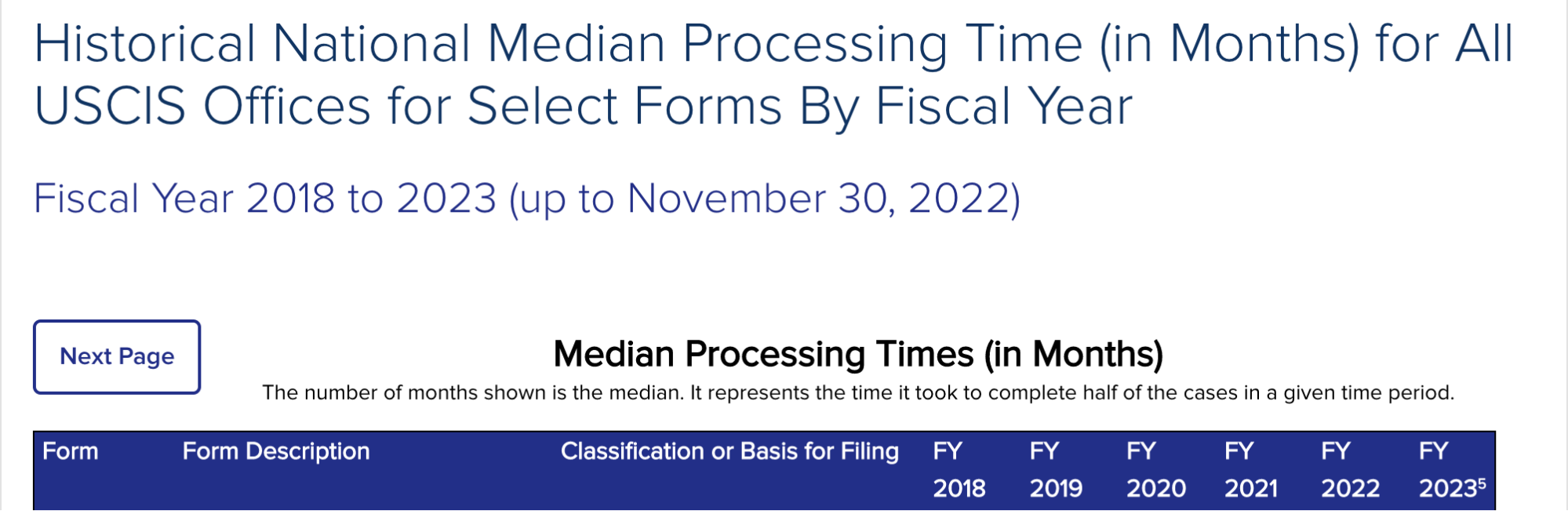
On the USCIS website, the historic I 526 processing time data section shows the median number of months it took USCIS to adjudicate all I-526 petitions. The median means the point by which 50% of the petitions were adjudicated.

As of January 2023, the median number of months it took to process I-526 petitions for FY 2023 was 47.2 months, or just under four years from the date of submission.

This means that half of all I-526 petitions were adjudicated in less than that time. It also means that, for many investors, the I 526 processing time is even significantly shorter than the median number.

When a prospective investor sees 47.2 to 58.5 months listed as the estimated processing times for an I-526 petition, they may lose motivation to make an EB5 investment. But the estimated processing time range is misleading for numerous reasons, the first being that the majority of I-526 petitions are processed outside the range.

Indeed, the lower number indicates the time by which 50% of petitions are adjudicated, while the higher number shows the time by which 80% of petitions are processed. If the estimates are 100% accurate, that leaves only 20% of petitions processed as long as or longer than this time range, with 50% processed sooner than indicated.

Thus, even without changes to the EB-5 program, an investor’s petition has a high chance of being adjudicated far before they might expect. But changes are likely to come to the EB-5 program—changes that could significantly speed up the EB5 investment process and the efficiency of the Immigrant Investor Program Office.

EB-5 Reform in Congress

The COVID-19 pandemic, and the subsequent global and governmental shutdowns, had an outsize impact on EB-5 processing times. The already increasing processing rates for EB-5 petitions skyrocketed due to the months-long consular shutdowns.

The EB-5 Reform and Integrity Act of 2022, passed and signed into law on March 15th, 2022, brings many welcome reforms to the EB-5 program. This bill was a bipartisan partnership, meaning it is an act of Congress that has support from members of both of America’s two major political parties, the Republicans and the Democrats.

The bill seeks to both preserve the legal integrity of the regional center program and reduce processing times back to their pre-pandemic levels. To that end, Congress has allowed concurrent filing of I-526 petitions and I-485 petitions to adjust immigration status. This will reduce the need for an additional form processing wait time—and consular processing—for those foreign nationals already legally residing in the United States under another visa, such as the H-1B.

The bill also asks for an additional fee of $1000 from regional center investors, money which goes to the U.S. Treasury’s sovereign fund to pay the adjudication of EB-5 visas. With more money, more adjudicators can be hired, speeding up processing for all.

united states capitol, politics, government

Biden’s Proposed USCIS Reform

The EB-5 Reform and Integrity Act isn’t the EB-5 program’s only shot at reform in 2023. The Biden administration has also proposed an overhaul to the U.S. immigration system as a whole.

Inside a Biden-backed bill titled the U.S. Citizenship Act of 2021 were provisions to accelerate processing for all visas, including the EB-5 immigrant visa, as well as various proposals that would result in more visas available to EB-5 investment participants.

For example, the bill endeavored to recapture unused visas and reuse them in the same program the next fiscal year instead of rolling them over to other programs. This could prove crucial for the EB-5 program to retain the thousands of extra visas allocated to it in FY2021.

Another proposal—one that would see spouses and dependent children exempted from employment-based visa quotas—would free up thousands of EB-5 visas annually that would otherwise be claimed by investors’ immediate family members.

For Chinese investors, who may hesitate to make an EB-5 investment given the massive backlog of Chinese EB-5 petitions, Biden’s proposed USCIS reform offers important changes. One of them is a mandate for USCIS to clear its many lengthy backlogs, which could finally end the years-long wait Chinese EB5 investment participants have been subject to.

A second change is the abolishment of country-based limitations, which would free up countless EB-5 visas for investors from China, Vietnam, and other high-population, high-demand countries.

Beat the Rush: The Best Time to Invest Is Now

Though only one of these bills has so far passed into law, the best time to make an EB-5 investment is before the next one is passed.

Although the U.S. Citizenship Act of 2021 did not pass Congress in its original form, the bill’s very existence points to a greater strategy in both the Biden administration and Congress as a whole, towards reopening and even expanding avenues to legal immigration in the U.S., and reducing processing wait times for all immigrants, including the EB-5 program.

It is clear that, though these additional reforms would not directly reform aspects of the EB-5 program, the changes they would bring would have a massive positive effect on the EB-5 industry was the Biden administration to continue its commitment to reduced processing times.

Considering the massive, wide-reaching, and positive effects these proposed changes would have on the EB-5 industry, enactment of either one (or, better, both) could see a flood of new I-526 applications, and those who beat the rush would clearly be in a preferable position.

The outlook for new EB-5 applicants may look bleak, given the data. But the reality is that the pandemic has been impacting processing times with the EB-5 program, and Congress has now taken steps to fight back.

With a combination of accelerated processing times and a larger supply of EB-5 visas, investors may receive their U.S. permanent residency rights far more quickly than expected.

Start your family’s Green Card journey today by contacting EB5AN at info@eb5an.com or scheduling a free consultation.


Free EB-5 Project Evaluation

EB-5 Demand Surging in 2021

EB-5 Demand Surging in 2021

Hot off the heels of a tumultuous 2020, which saw a mere 114 new applicants to the EB-5 Immigrant Investor Program, 2021 is ramping up to welcome far more immigrant investors to the famed residency-by-investment program. Many of these new EB-5 investment participants are living in the UAE, but not necessarily as citizens. The bulk of the U.S. immigrant hopefuls are Indians and Africans with abundant liquid assets looking to secure permanent resident status in the United States.

New applications to the EB-5 program have steadily fallen since a peak in 2015, when 14,737 EB5 investors and their families took the first step toward a new life in the United States. Various factors since have caused a drop, with 2020 taking the crown for the least new EB-5 investment applications in recent years. Similarly, the factors driving the surge in EB5 investment demand in 2021 are also many.

Why Was EB-5 Demand Down in 2020?

The year 2020 is poised to become synonymous with “COVID-19 pandemic” as we hurtle through to the future. The EB-5 industry was certainly among those in the path of chaos the pandemic left in its wake, with worldwide U.S. embassy and consulate service suspensions effectively halting the EB-5 investment process for countless investors. The pandemic contributed to the fall in EB5 investment interest in 2020, both due to investors consciously deciding to wait until the pandemic subsided as well as shutdowns and lockdowns preventing investors from initiating the process.

COVID-19 was not the sole factor driving the low demand in 2020, however. Another key demotivator for would-be EB-5 investment participants was the Modernization Rule, enacted in November 2021, which pushed up the minimum required investment amount by a whopping 80%. Overnight, the lowest acceptable amount for an EB-5 investment in a targeted employment area (TEA) jumped from $500,000 to $900,000, with the minimum amount for non-TEA investments rising from $1 million to $1.8 million. EB-5 investors rushed to file their I-526 petition before the rule went into effect, resulting in a deluge of applications in October and November 2020 but hardly any in the months following. Demand has subsequently sunk simply due to the numerous applicants who can no longer afford to make an EB5 investment.

Internal issues with United States Citizenship and Immigration Services (USCIS) also resulted in diminished numbers of new investors in 2020. The backlogs were as long as ever, with China, Vietnam, and India impacted at the dawn of 2020. Though the Indian backlogs cleared up in July 2020 and the Indian final action date has remained current ever since, the long wait times at the beginning of the year intimidated new Indian EB-5 investment participants. Furthermore, given USCIS’s utter lack of productivity in adjudicating I-526 petitions, some investors decided the program wasn’t worth the delays and headaches.

Why Is EB-5 Demand Up in 2021?

Just as the reasons for the EB-5 demand depression in 2020 are numerous, so too are the reasons for the surge in 2021. Though the pandemic rages on, the world has begun to acclimatize, and more investors are willing to dive into an EB-5 investment despite COVID-19. But lockdown fatigue isn’t the only reason foreign investors are flocking to the EB-5 program in 2021.

One important factor is the transition of power from the Trump administration to the Biden administration. Whereas Trump was known for his harsh-on-immigration stance, President Biden is seen as far friendlier toward immigrants, and his administration has even released a list of proposed changes to the U.S. immigration system, most of which would be favorable for EB-5 investment participants. The friendlier immigration environment in the United States is conducive to more I-526 filings.

However, the primary reason foreign nationals are choosing to embark on an EB5 investment journey in 2021 is the EB-5 Regional Center Program’s sunset date of June 30, 2021. Historically, the regional center program was bundled up with a broader government spending bill that was automatically renewed upon the approval and passing of a new budget, but Congress divorced the program from the bill when it reauthorized it in December 2020. This leaves the EB-5 Regional Center Program vying for reauthorization on its own and presents the very real threat of termination.

The Possibility of Regional Center Program Termination

The possibility that the popular regional center program will be terminated is more real than ever, but there is hope—namely, in the form of the EB-5 Reform and Integrity Act introduced by Senators Chuck Grassley and Patrick Leahy. If the bill is passed, it will strengthen integrity measures in the EB-5 program to better protect investors, root out fraudulent activity, and reauthorize the EB-5 Regional Center Program through 2024.

Industry leaders see reform as the only viable path to reauthorization. While confidence is high that the bill will be passed, the possibility of termination still looms, and if the program were terminated, it would effectively nullify the ability of many foreign nationals to invest in a permanent life in the United States. As more and more prospective investors learn of the looming sunset date, they rush to file their I-526 petition before it arrives. The EB-5 Regional Center Program will likely be safe, but foreign nationals pursuing permanent residency rights in the United States shouldn’t count on that—making an EB-5 investment before June 30, 2021, is the wisest option.


Free EB-5 Project Evaluation

When Should I Start Preparing My I-526 Petition?

When Should I Start Preparing My I-526 Petition

Anyone who wishes to immigrate to the United States by making an EB-5 investment under the EB-5 Immigrant Investor Program must set the process in motion by filing Form I-526 with United States Citizenship and Immigration Services (USCIS). The program is fairly straightforward, offering foreign investors U.S. permanent resident status in exchange for a qualifying EB5 investment that fulfills certain requirements, including a minimum required investment amount and the creation of at least 10 full-time jobs for U.S. workers.

After conducting careful due diligence to select the most suitable project and EB-5 regional center, an investor should transfer their EB-5 investment capital to the designated escrow or project account and file an I-526 petition with USCIS to obtain their U.S. conditional permanent resident status. Upon I-526 approval, the foreign investor may submit an application for a green card.

How Long Does It Take to Prepare an I-526 Petition?

Every EB5 investment is different, and consequently, every I-526 petition requires different documentation and information. Preparing an I-526 petition can be a lengthy process, taking weeks or months, depending on an investor’s circumstances, so starting early could be a wise decision.


The informational part of the I-526 petition is generally straightforward—investors must input personal information about themselves and any accompanying family members as well as information about their investment and the EB-5 project. The time-consuming portion is the document-gathering phase, which, depending on the EB-5 investment, can be a highly involved process.

Necessary documentation includes identifying documents for the investor and any accompanying family members, as well as proof that the EB5 investment capital was transferred to the project or a designated escrow account. While most investors have no problem presenting these papers, the lawful-source-of-funds requirement represents a much more challenging task. All EB-5 investors must prove that their investment capital was derived from lawful sources, whether from employment or a business, loans, the sale of assets, inheritance, or even a gift from relatives. Depending on the source, these documents may be difficult to gather, which is why EB-5 investors are advised to consult an experienced EB-5 immigration lawyer to determine the best sources of funds to use.

Finally, if any of the documents an investor encloses with their I-526 application are not in English, they must provide certified translations as well.

What Else Can Delay the Preparation of an I-526 Petition?

Lengthy document preparation isn’t the only thing that can derail the progression of an I-526 petition. To begin with, even if an investor is eager to relocate to the United States as quickly as possible, it’s crucial to take the time to conduct careful due diligence on any prospective EB-5 project and regional center to ensure it’s operated by seasoned professionals and can satisfy the investor’s objectives. An investor should read the project documentation carefully to understand the terms and conditions of their EB5 investment as well as their position and responsibilities in the new commercial enterprise (NCE).

If the project is in a targeted employment area (TEA)—and EB-5 projects affiliated with regional centers usually are—the investor must submit additional documentation justifying the TEA designation of the area. TEA projects are eligible for a lower minimum required investment amount: $900,000 instead of the regular $1.8 million. Whether the investor is working with a high-unemployment or rural TEA, they must provide USCIS-accepted documentation for their $900,000 EB-5 investment to be approved.

Finally, delays can occur even after I-526 submission—in fact, they may even be likely. USCIS is notoriously slow at processing EB-5 applications, leaving investors to wait for two to even five or six years, depending on their country of citizenship. No matter how quickly an investor completes and submits their I-526 petition, they may still face substantial processing delays.

Hire an Immigration Attorney and Start Early

The best course of action for EB-5 investors is to hire a reliable EB-5 immigration lawyer to guide them in their I-526 preparation process. An immigration attorney can not only help an investor select a suitable EB-5 project and conduct meticulous due diligence but also guide them through the I-526 preparation procedures, including identifying the easiest sources of funds to provide. Starting early will minimize delays and help EB-5 investors secure their new life in the United States that much faster.

Free EB-5 Project Evaluation

How to Create an EB-5 TEA with Adjacent Census Tracts

How to Create an EB-5 TEA with Adjacent Census Tracts

Any foreign investor hoping to immigrate permanently to the United States should consider the EB-5 Immigrant Investor Program, which offers permanent resident status in exchange for a successful EB-5 investment in a qualifying EB-5 project. For an EB5 investment to be considered successful, it must satisfy a myriad of requirements that make it beneficial for the U.S. economy and its people, including the creation of at least 10 full-time jobs for U.S. workers. An EB-5 investor’s capital must also be demonstrated to originate from lawful sources, ensuring the flow of legal foreign EB-5 investment capital into the United States.

One requirement that can halt a prospective investor’s journey into the EB-5 program is the minimum required investment amount, which stands at $1.8 million. Having risen 80% from $1 in November 2019, when the Modernization Rule came into effect, the minimum required investment amount filters out numerous interested investors who simply don’t possess the means to participate in the EB-5 program.

But there is a solution, at least for some prospective investors. There is a way to halve the minimum required investment amount to just $900,000, and in fact, it is the pathway most EB-5 investors opt for. It’s simple: just invest in a targeted employment area (TEA).

What Is a TEA?

The EB-5 program was created to address unemployment and in-need regions in the United States, but as a federal program, the targeted stimulation of in-need areas is challenging. Thus, TEAs were born, offering a lowered minimum EB-5 investment amount for deployment in these critical areas. A TEA can be designated either as a high-employment TEA, with an unemployment rate 50% higher than the national average, or as a rural TEA, with a population of fewer than 20,000 people.

The problem with TEA EB5 investment is that TEA designation is not awarded by United States Citizenship and Immigration Services (USCIS)—instead, the investor must provide justification on their I-526 petition that TEA designation is warranted for the area of their project. While this introduces extra work and rampant uncertainty in TEA investments, it does simultaneously offer an advantage: the ability to construct one’s own TEAs.

Creating TEAs with Census Tracts

Using the EB-5 TEA map from EB5AN, a prospective investor can scan the entire United States for TEA-eligible regions and home in on more suitable EB5 investment projects. The map consists of census tracts, with those that qualify for TEA status highlighted in orange. But TEA designation is more fluid than rigid census tracts may imply—USCIS allows investors to combine multiple adjacent census tracts to create a TEA.

Prior to the enactment of the Modernization Rule in November 2019, census tract aggregation was more flexible, with investors able to combine a number of nearby census tracts to reach a TEA. Even if the census tract of the EB-5 project itself was not eligible for TEA status, by journeying one or two census tracts out, an investor could attain TEA designation for their project and qualify for the lower minimum EB-5 investment amount. The TEA census tract did not have to border the project census tract, allowing for the creation of various TEAs.

When the Modernization Rule was enacted, it altered the nature of TEA customization, requiring any additional census tract to be directly adjacent to the target census tract. This new rule dramatically restricts TEA creation, effectively starving EB-5 projects that would previously have qualified for TEA status of precious EB-5 investment capital. While these rules may have helped prevent some instances of gerrymandering, they have also likely hurt the inflow of foreign EB5 investment capital into in-need areas, given that census tracts are relatively small and a successful new enterprise in a nearby census tract is likely to benefit a high-unemployment census tract, even if the census tracts are not directly adjacent.

Prospective EB-5 investors can still take advantage of census tracts to create new TEAs, but they must conduct their research carefully to ensure USCIS approval. Should an I-526 petition fail to garner TEA designation for its EB-5 project, the investor will be required to invest at least $1.8 million in the new commercial enterprise.

Free EB-5 Project Evaluation

USCIS Updates “EB-5 General Questions and Answers” Document

USCIS Updates “EB-5 General Questions and Answers
When United States Citizenship and Immigration Services (USCIS) held an EB-5 engagement presentation on November 11, 2020, it failed to touch on pertinent questions posed by EB-5 industry leaders. However, in a quiet and belated response, USCIS did answer—or at least address—some of the questions it ignored in the public engagement when it updated its General Questions and Answers document on December 16, 2020. EB-5 investment participants are encouraged to peruse the document at their leisure, but for those looking for a quick rundown of the content, read on.

I-526 Petition Information

According to the updated document, EB5 investment participants with I-526 petitions approved for expedited processing are not necessarily approved faster than regular I-526 petitions. The petition’s assignment for adjudication is accelerated, but adjudication times will vary depending on the circumstances of the individual petition. Regular I-526 petitions are assigned for adjudication based on visa availability. USCIS indicates it assesses visa availability monthly and updates I-526 workflows each month accordingly.

USCIS also explains situations in which an I-526 petitioner may be asked to provide evidence of jobs already having been created. Since I-526 processing is exorbitantly slow, in some cases, the job creation plan an EB5 investment participant presents in their I-526 petition may have already come to fruition. In such cases, USCIS may request evidence that those jobs have indeed been created.

USCIS states it has no intentions to develop technology to allow project-related documentation filed with a pending or approved I-924 petition to be incorporated with an I-526 petition. It acknowledges this inefficiency in the system but cites budget constraints as the prohibitory reason.

I-829 Petition Information

USCIS provides information on adding an eligible dependent (spouse or unmarried children younger than 21) to an I-829 petition—it is possible but requires a number of forms and documents. Those looking to share the benefits of their EB-5 investment with dependents not included in their I-526 petition should send an email to USCIS.ImmigrantInvestorProgram@uscis.dhs.gov with “Request to Add Derivative to Form I-829” as the subject line. The investor will then be provided with a cover sheet to mail in alongside numerous forms and documents.

USCIS also touches on I-829 denials—an investor whose I-829 petition is denied is already residing in the United States, which renders the situation more complicated than with I-526 denial. USCIS policy is to issue a notice to appear (NTA) with the immigration court, but in most cases, the agency waits until the initial motion period has elapsed. However, USCIS reserves the right to turn I-829 denial cases over to ICE more quickly.

On the subject of I-829 denials, USCIS also addresses the impact of fraudulent activity in a new commercial enterprise (NCE) on I-829 petitioners. Fraudulent activity on the part of the NCE will not necessarily result in denial for the EB-5 investment participant, but if it prevents the EB5 investment from fulfilling the requirements of the EB-5 program—such as creating at least 10 full-time jobs for U.S. workers—the petition may face denial.

Finally, USCIS answers a question regarding I-829 receipt notices reissued in July 2020 to EB5 investment participants waiting on I-829 approval. While some speculated that this indicated they were being given an additional 18 months of conditional permanent residency, USCIS clarified that they were merely sent as replacements for petitioners who may not have been sent an initial receipt notice.

Regional Center Information

Given the streak of regional center terminations in 2019 and 2020, USCIS was forced to answer a question in the Q&A regarding the publication of termination letters, but the agency’s disappointing answer was that it cannot provide a timeline for the publication of termination letters from 2019 and 2020. Similarly, it stated that it does not plan to publish regional center designation letters. When asked whether it will publish more detailed guidelines on regional center compliance duties and standards to avoid termination, USCIS simply responded that it evaluates terminations on a case-by-case basis and cannot provide further guidance due to the different circumstances of each project.

Regarding the “Advance Notice of Proposed Rulemaking on Changes to EB-5 Regional Center” Program (ANPRM), USCIS was also asked in the Q&A about the status and when stakeholders can expect to hear back about the comments they submitted. The agency’s lackluster response, which ignored the second part of the question entirely, was that it can offer no updates.

For regional centers ready to file their annual report for FY2020, USCIS explains that a new version of Form I-924A, released July 23, 2020, should be used for all filings later than January 5, 2021.

Finally, USCIS addresses an important issue for regional centers concerned about termination: whether an approved regional center will be terminated if it fails to submit affiliated I-526 petitions within a three-year time period. USCIS stated that no such requirement exists, even though this metric was used to justify regional center terminations in 2018. The termination letters for 2019 and 2020 will offer more clarity on this issue when they are finally published.

Free EB-5 Project Evaluation

Navigating SEC Regulations in EB-5 Redeployments

Navigating SEC Regulations in EB-5 Redeployments

Given that the EB-5 Immigrant Investor Program constitutes one of the quickest and simplest ways to attain U.S. permanent resident status, its popularity has ballooned over the years since its 1990 inception. The program, originally created to attract foreign capital to the United States and drive job creation, has injected billions in foreign capital into the U.S. economy, in return issuing U.S. green cards to thousands of EB-5 investors and their immediate family members.

To be eligible for a U.S. green card, an EB-5 investment participant must fulfill certain criteria, including the funding of at least 10 full-time jobs for U.S. workers, the provision of comprehensive source-of-funds documentation for all EB-5 investment capital, and proof that the EB-5 funds have remained at risk throughout the entire investment period. Every EB-5 investment and EB-5 project is different, and as such, different investors may have an easier or harder time with some requirements, but all EB5 investments must meet the outlined requirements to garner a U.S. green card.

The Difficulties in Meeting the “At Risk” Requirement

The EB-5 program’s requirement to maintain capital “at risk” by no means indicates that EB5 investments should be risky. EB-5 investors are advised to make sensible investment decisions that they deem likely to generate a return, but no matter what, the investment must incur both the risk of loss and the possibility of gain. The “at risk” requirement is as simple as maintaining one’s EB-5 investment funds in such a state for the duration of the investment. However, the maintenance of EB5 investment funds in an at-risk state can become complicated through no fault of the investor.

Typically, an EB-5 investor participates in the residency-by-investment program through an EB-5 regional center—region-based entities that facilitate EB-5 investment projects by attracting investors and pooling together their funds for a larger investment. The investor transfers their EB5 investment capital to the respective new commercial enterprise (NCE), which, upon receipt of all participating investors’ funds, aggregates it into a single investment and injects it into the job-creating entity (JCE) for a five-year term. In the earlier years of the EB-5 program, this scenario functioned smoothly, with investors easily swimming through the EB-5 program’s processes and becoming eligible to exit by the end of the five-year investment term.

Problems sprouted up in 2014, when the popularity of the EB-5 program began to exceed yearly EB-5 visa numbers. Investors from China, India, and Vietnam in particular dove into the program at previously unseen rates, which triggered lengthy visa backlogs and therefore significant processing delays that still linger in 2020. As of December 2020, processing times can last several years, particularly for investors from China, and can easily exceed the typical five-year EB-5 investment term adopted by most NCEs. If an EB-5 investor is not eligible to exit at the end of the five-year term, redeployment of their capital is necessary.

What Is EB-5 Redeployment?

EB-5 redeployment is, simply, the reinvestment of EB-5 capital in an NCE. At the end of the five-year EB-5 investment term, assuming the JCE was successful and paid back the loan to the NCE, the NCE may then either pay back the funds to the investor(s) or redeploy the capital under similar investment terms and conditions. An EB-5 investor who fails to meet the EB-5 requirements to exit, even if simply through processing delays due to backlogs or United States Citizenship and Immigration Services (USCIS) inefficiency, may elect to have the amount paid back instead of redeploying it, but by doing so, they would be forfeiting their opportunity to obtain U.S. permanent resident status.

SEC Regulations on EB-5 Redeployments

The United States Securities and Exchange Commission (SEC) exists to protect investors in the United States, as well as foreign nationals making U.S.-based investments, and as such, its regulations apply to EB5 investments. The SEC therefore represents an additional hurdle for EB-5 investors and NCEs to circumvent in the case of redeployments, which initially were never supposed to materialize in the EB-5 program. The SEC holds that if an EB-5 investor has to make a decision between exiting and redeploying their EB-5 investment capital, the redeployment constitutes a new sale of securities that must be appropriately registered or exempted from registration.

If an NCE requests to reuse an investor’s capital, it is analogous to requesting voluntary assessments from the investor, as is common in real estate and oil and gas securities. An NCE may write into its offering documents the circumstances for such a request, as well as the maximum amount that may be requested and how the funds may be used. In this case, the SEC would not determine the redeployment to be a new investment decision, as the details surrounding the investment were discussed and agreed upon in the initial deployment of capital. However, the SEC deems any other EB-5 redeployment situation to constitute a new offering of securities.

Similar to the SEC’s ruling on voluntary assessments is its guidance on rescissions, or the request of a party to annul an investment agreement. If the NCE makes a rescission offer to an EB-5 investor, the investor must decide whether to accept the offer and sell their securities or to reject the offer and maintain their securities. The SEC deems this, too, to be a sale of securities that requires registration or appropriate exemption.

A further area of consideration for NCEs is statute of limitations determinations, given that courts have used “investment decision doctrine” when determining whether a given sale of securities constitutes a new investment decision. In these cases, the defendants usually employ a statute of limitations defense, asserting that the initial sale of securities took place before permitted by the statute. The plaintiffs, in turn, request that the court consider the date on which the funds were called and paid, not the date of the initial sale.

Based on the above SEC regulations, in most cases when an NCE receives repayment for EB-5 investment capital and asks the EB-5 investors whether they would prefer to receive their repayment or redeploy their capital in another JCE, the Securities Act must be analyzed to determine whether the investment decision constitutes a new offering of securities. If the decision is determined to be a new securities offering, analysts must further consider whether it falls under any of the exemptions laid out by the Securities Act. EB-5 professionals should bear in mind that previously applicable exemptions may no longer apply a second time, such as if an EB-5 investor’s accreditation or domicile have changed since the initial sale.

Free EB-5 Project Evaluation

March 2021 Visa Bulletin: Zero Movement on Chinese EB-5 Backlogs, Vietnam Inches Forward

March Visa Bulletin Zero Movement on Chinese EB-5 Backlogs

The March 2021 Visa Bulletin is now available through the U.S. Department of State (DoS) website, and news for the EB-5 community as we wrap up the second quarter of FY2021 remains relatively unchanged. The DoS publishes the Visa Bulletin monthly so that petitioners can remain informed on the status of visa availability. Despite hopes of a more productive year than the last, we still see zero movement on Chinese EB-5 backlogs, and Vietnam dates merely inch forward.

Again, investors hoping to gain access to U.S. permanent residency status through this residency-by-investment program have been left with little information. Most disheartening is that the agency has yet to even devise an actionable plan to take full advantage of the thousands of extra EB-5 visas allocated to the program for FY2021. Backlogged investors can only watch the time being squandered as they linger in their respective lines. Nearly halfway through the fiscal year, it seems the loss of the opportunity to reduce long-standing Chinese and Vietnamese EB-5 backlogs is eminent.

Moreover, just a few weeks into the new administration’s more concerted efforts to distribute the COVID-19 vaccine, new, more contagious strains of the virus continue to develop, and as we approach the sunset date of June 30, 2021, for the EB-5 Regional Center Program, there is an even greater risk for the program’s termination. While industry leaders rally stakeholders to join forces in EB-5 reform, little else is on the horizon to change the current status of the program. EB-5 investors should continue to prepare for the possibility of another stagnant year at best.

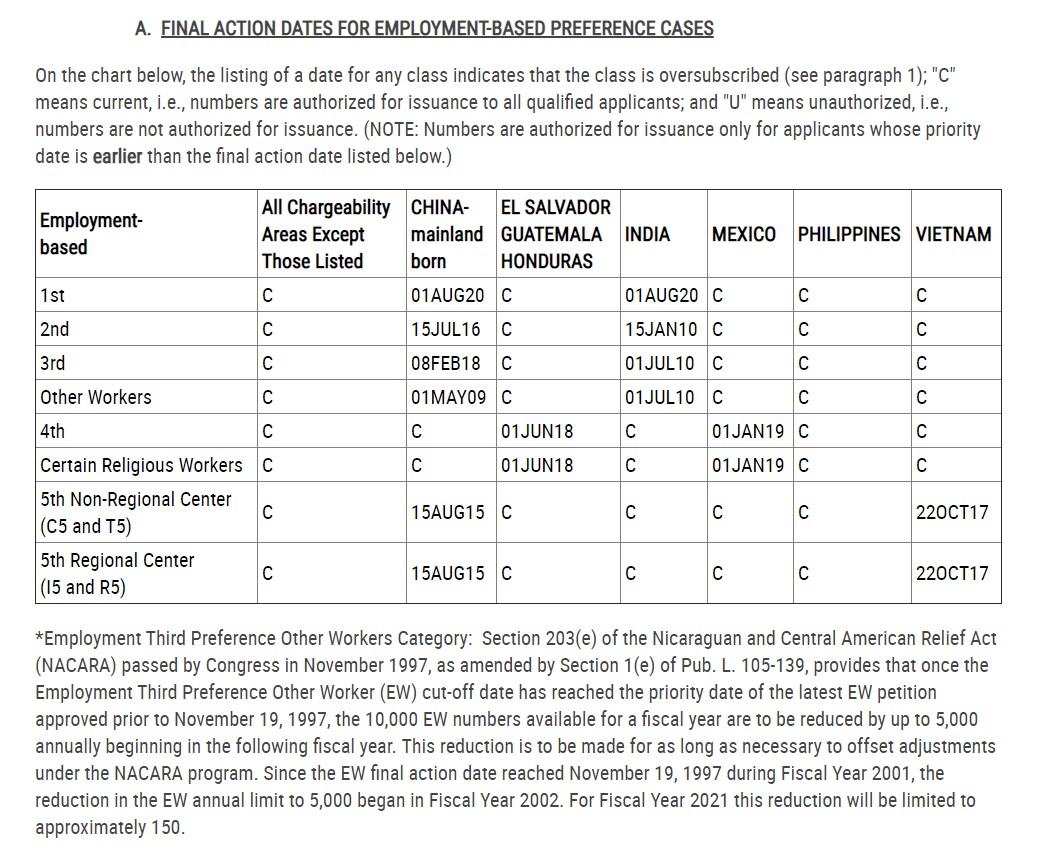
We have some good news: All EB-5 investors outside of China and Vietnam have maintained their “current” status on their final action dates, including India, whose status became “current” in July 2020. Unfortunately, the outlook remains unchanged for EB-5 investment participants from China and Vietnam. The final action date for China has remained fixed at August 15, 2015, since the publication of the August 2020 bulletin. Wait times actually continue to increase for Chinese investors as they enter month eight of inaction on that final action date.

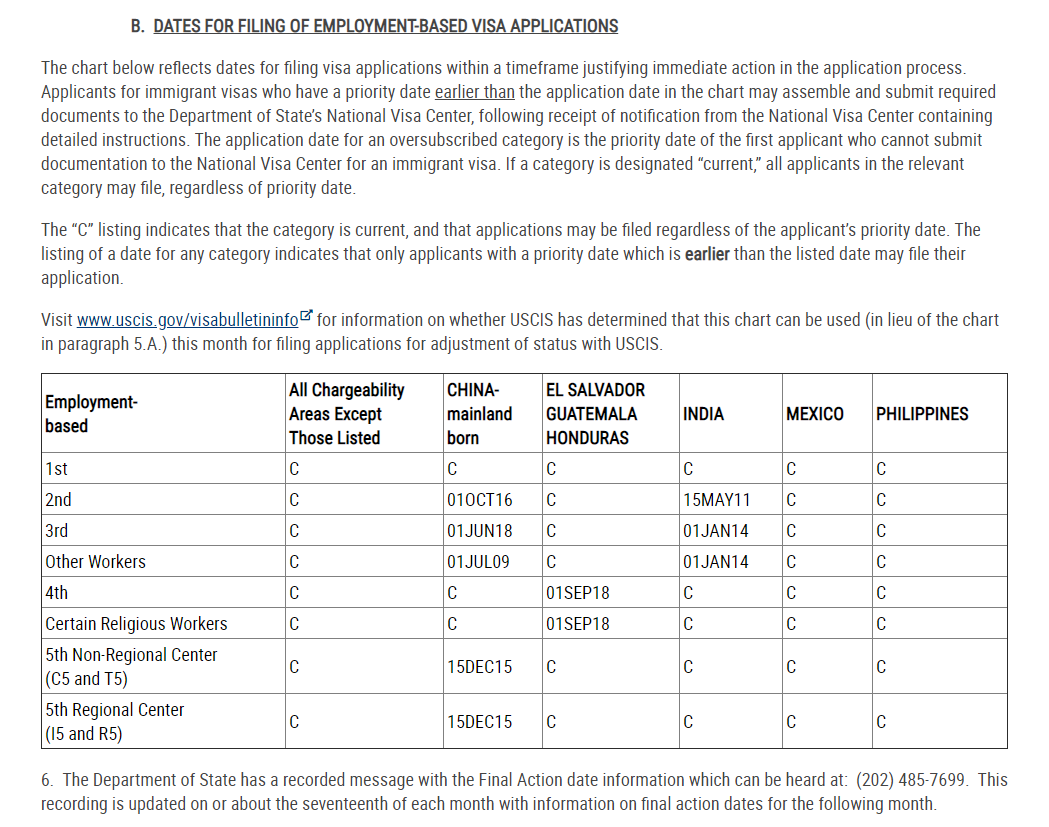
Furthermore, the date for filing on Chinese petitions hasn’t changed either, holding steady at December 15, 2015, for a year now. Vietnam shows a little more progress than that as it inches forward another two weeks from the February 2021 bulletin.

Industry experts are still baffled about why the increase in EB-5 visas allocated for the year hasn’t improved these backlog issues at all. There wasn’t much hope at the publishing of February’s bulletin, and unfortunately, USCIS’s song remains the same for another month. If anything, recent history has proven that circumstances can change at a moment’s notice, but right now, there aren’t any visible signs of a shift for the better.