Consular processing Free EB-5 Project Evaluation

Why EB-5 Adjudication Times May Speed Up Dramatically

Consular processing

Lengthy processing times for I-526 petitions (the first visa petition filed by EB-5 investors) have long plagued the EB-5 Immigrant Investor Program, leaving qualified investors in limbo for years waiting for their conditional permanent resident status. For those unfortunate to hold a passport from a backlogged country—as of January 2023, China and India—waits are even longer.

Despite the ever-growing processing delays, United States Citizenship and Immigration Services (USCIS) has done little to address inefficiency, instead focusing on staying afloat amid financial difficulties.

The long processing times have been turning prospective participants away from pursuing an EB-5 investment, and it’s understandable—the time and effort required for an EB5 investment may not be worth it if an investor is satisfied with Canada’s or Australia’s residency-by-investment program or if they have children in danger of aging out of eligibility for a U.S. Green Card.

However, in 2023, the situation is looking up for EB-5 processing times, and it may just be the perfect time to jump into an EB-5 investment.

The EB-5 Immigrant Investor Program

The EB-5 Immigrant Investor program is one of the fastest and most reliable ways to receive a U.S. Green Card. In exchange for one passive qualifying investment, a foreign investor, their spouse, and all unmarried children under the age of 21 can receive permanent resident status in the United States.

The minimum EB-5 investment in a new commercial enterprise (NCE) or job-creating entity (JCE) is $1,800,000. If the chosen EB-5 project is located in a targeted employment area (TEA), meaning a rural area or an area of high unemployment, then the minimum investment is lowered to $800,000.

Through the EB-5 program, the immigrant investor and their eligible family members can live, work, and study anywhere in the United States without restriction, and without an employer or educational visa sponsor. They can even apply for U.S. citizenship after holding a Green Card for five years.

What is an I-526 Petition?

An I-526 or I-526E petition is essentially an investor’s “application” to qualify for the EB-5 immigrant visa process. This form, along with much supporting documentation, is to prove that the investor has made the minimum EB-5 investment in a qualifying new commercial enterprise (NCE) and that the NCE used their lawfully-sourced EB-5 capital to create a minimum of 10 full-time jobs for U.S. workers.

The EB-5 Reform and Integrity Act of 2022 split the formerly unified EB-5 immigrant petition into two separate petitions, depending on the nature of the foreign national’s capital investment:

  • Form I-526, Immigrant Petition by a Standalone Investor, is for direct EB-5 investors.
  • Form I-526E, Immigrant Petition by a Regional Center Investor, is for immigrant investors who pool their investment with other EB-5 investors through a USCIS-approved regional center.

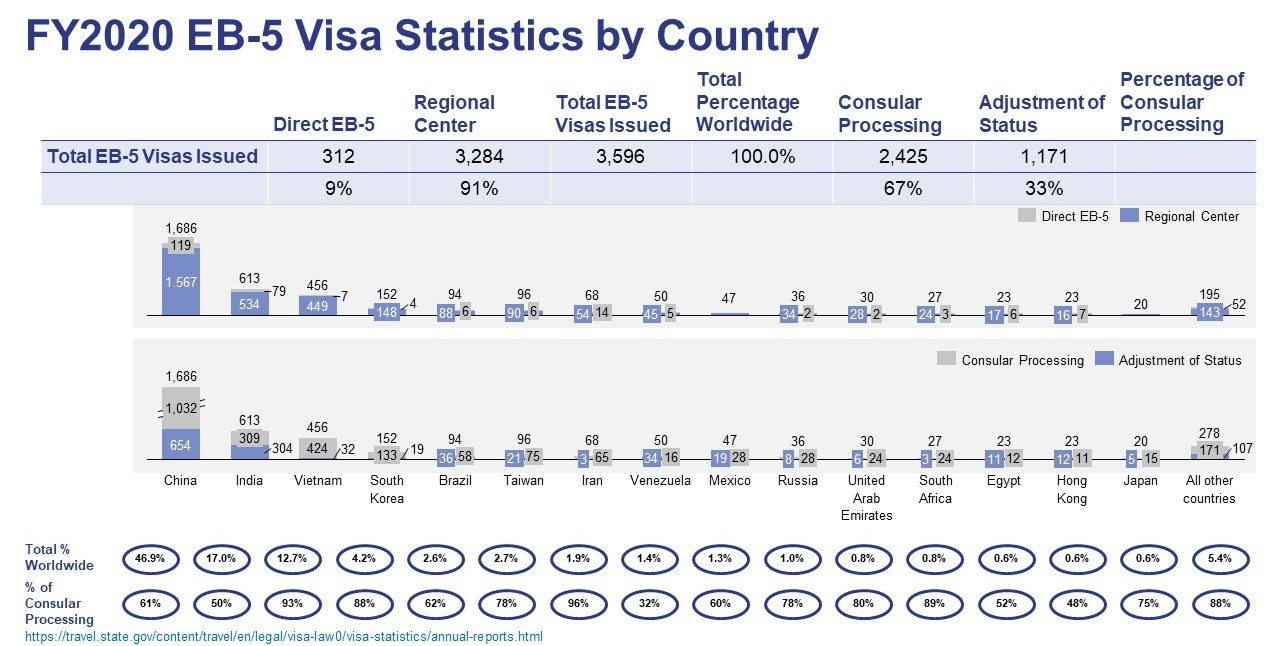
A significant 94% of successful EB-5 Green Card applicants are regional center investors, according to a recent study of USCIS processing data.

Direct investors may only count W-2 employees of the NCE towards their job creation requirement. Regional center investors may count both direct employees and indirect jobs sustained through econometric modeling.

Once an immigrant investor’s I-526 or I-526E petition is approved, the investor, their spouse, and all unmarried children under the age of 21 will receive a two-year U.S. Green Card, granting them conditional permanent resident status in the United States.

Conditional permanent resident status lasts for two years. During this time, investors may live, work, or study anywhere in the United States. Their EB-5 investment must remain “at-risk” and the 10 or more jobs created must be sustained for a minimum of two years.

What is an I-829 Petition?

During the last 90 days of the two-year conditional permanent resident status, an immigrant investor’s immigration attorney files their I-829 petition with USCIS.

  • Form I-829 is a petition to remove conditions from an investor’s conditional Green Card, and grant them full permanent resident status in the United States.

In order to do this, investors must compile supporting documentation to prove that their lawfully-sourced EB-5 investment actually did create and sustain 10 or more full-time jobs for U.S. workers, and that the investment itself did remain “at-risk” the entire time, as planned in the investor’s I-526 petition.

Once the I-829 petition is approved, an investor, their spouse, and all unmarried children under the age of 21 will receive full U.S. Green Cards, granting permanent resident status in the United States.

Immigrant investors may live, work, or study anywhere in the United States, without restriction, permanently. They will also have the option to become a U.S. citizen, only five years after establishing conditional permanent residency.

archive, boxes, shelf

Estimated Processing Times Don’t Match Historical Average Processing Times

USCIS publishes up-to-date and historic processing times for nearly all forms associated with the EB-5 program on its website. However, those who aren’t familiar with how USCIS presents its data should be warned: these processing times may not mean what you think.

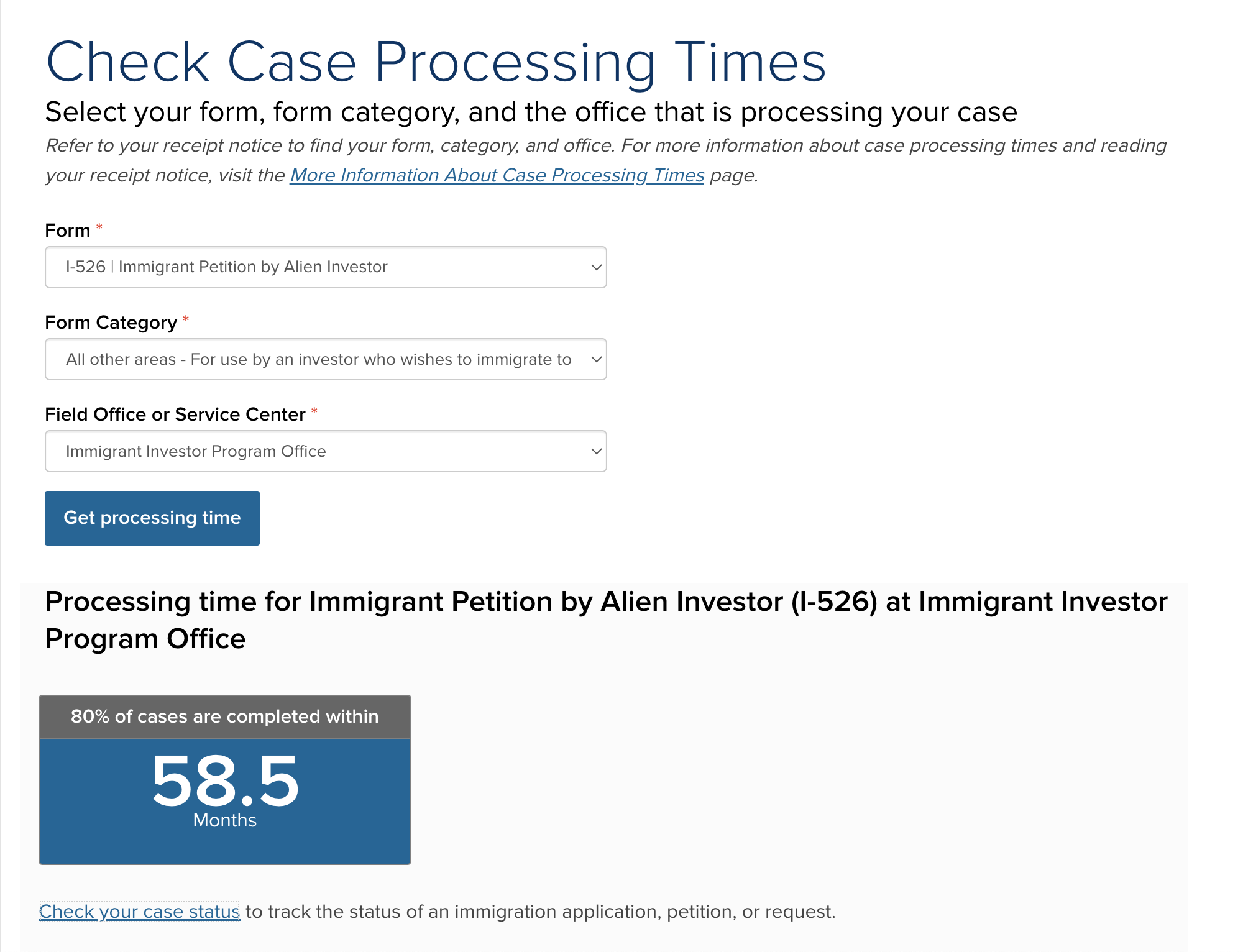
When an investor first searches for current I-526 processing times on the USCIS website, they will come across this number “58.5 months”, current as of January 2023.

This is not the average processing time. This is not the median processing time. This number represents the time it took to process 80% of all I-526 petitions adjudicated in the previous six months.

Eb5 visa

EB-5 investment

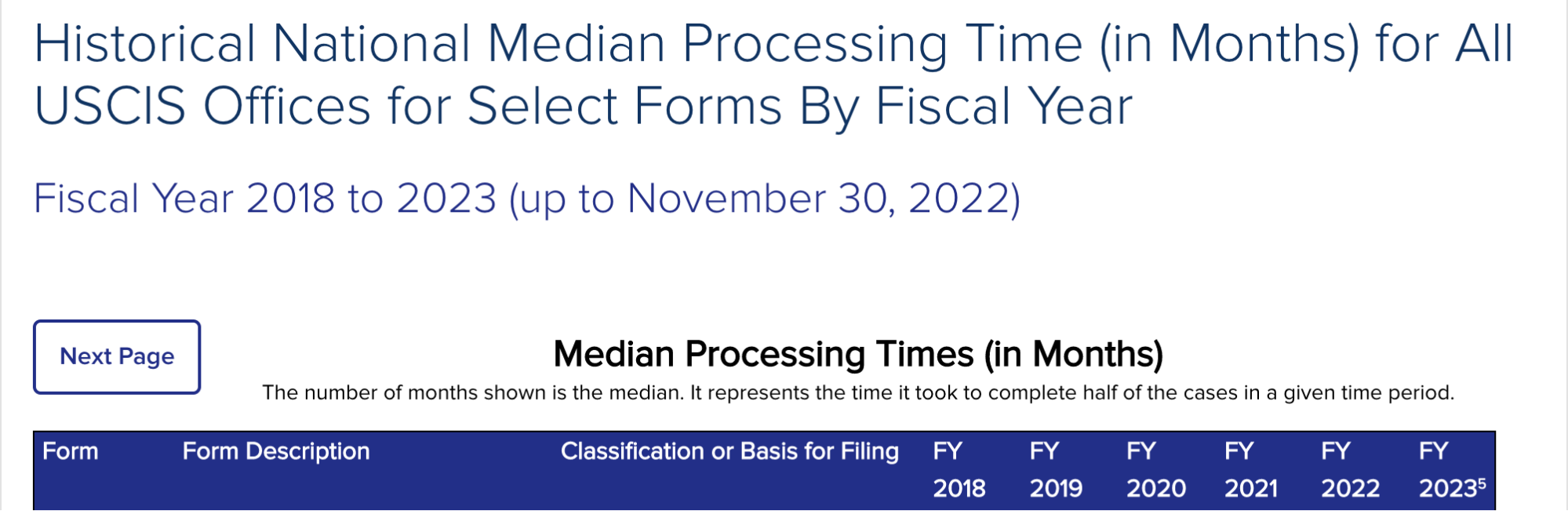
On the USCIS website, the historic I 526 processing time data section shows the median number of months it took USCIS to adjudicate all I-526 petitions. The median means the point by which 50% of the petitions were adjudicated.

As of January 2023, the median number of months it took to process I-526 petitions for FY 2023 was 47.2 months, or just under four years from the date of submission.

This means that half of all I-526 petitions were adjudicated in less than that time. It also means that, for many investors, the I 526 processing time is even significantly shorter than the median number.

When a prospective investor sees 47.2 to 58.5 months listed as the estimated processing times for an I-526 petition, they may lose motivation to make an EB5 investment. But the estimated processing time range is misleading for numerous reasons, the first being that the majority of I-526 petitions are processed outside the range.

Indeed, the lower number indicates the time by which 50% of petitions are adjudicated, while the higher number shows the time by which 80% of petitions are processed. If the estimates are 100% accurate, that leaves only 20% of petitions processed as long as or longer than this time range, with 50% processed sooner than indicated.

Thus, even without changes to the EB-5 program, an investor’s petition has a high chance of being adjudicated far before they might expect. But changes are likely to come to the EB-5 program—changes that could significantly speed up the EB5 investment process and the efficiency of the Immigrant Investor Program Office.

EB-5 Reform in Congress

The COVID-19 pandemic, and the subsequent global and governmental shutdowns, had an outsize impact on EB-5 processing times. The already increasing processing rates for EB-5 petitions skyrocketed due to the months-long consular shutdowns.

The EB-5 Reform and Integrity Act of 2022, passed and signed into law on March 15th, 2022, brings many welcome reforms to the EB-5 program. This bill was a bipartisan partnership, meaning it is an act of Congress that has support from members of both of America’s two major political parties, the Republicans and the Democrats.

The bill seeks to both preserve the legal integrity of the regional center program and reduce processing times back to their pre-pandemic levels. To that end, Congress has allowed concurrent filing of I-526 petitions and I-485 petitions to adjust immigration status. This will reduce the need for an additional form processing wait time—and consular processing—for those foreign nationals already legally residing in the United States under another visa, such as the H-1B.

The bill also asks for an additional fee of $1000 from regional center investors, money which goes to the U.S. Treasury’s sovereign fund to pay the adjudication of EB-5 visas. With more money, more adjudicators can be hired, speeding up processing for all.

united states capitol, politics, government

Biden’s Proposed USCIS Reform

The EB-5 Reform and Integrity Act isn’t the EB-5 program’s only shot at reform in 2023. The Biden administration has also proposed an overhaul to the U.S. immigration system as a whole.

Inside a Biden-backed bill titled the U.S. Citizenship Act of 2021 were provisions to accelerate processing for all visas, including the EB-5 immigrant visa, as well as various proposals that would result in more visas available to EB-5 investment participants.

For example, the bill endeavored to recapture unused visas and reuse them in the same program the next fiscal year instead of rolling them over to other programs. This could prove crucial for the EB-5 program to retain the thousands of extra visas allocated to it in FY2021.

Another proposal—one that would see spouses and dependent children exempted from employment-based visa quotas—would free up thousands of EB-5 visas annually that would otherwise be claimed by investors’ immediate family members.

For Chinese investors, who may hesitate to make an EB-5 investment given the massive backlog of Chinese EB-5 petitions, Biden’s proposed USCIS reform offers important changes. One of them is a mandate for USCIS to clear its many lengthy backlogs, which could finally end the years-long wait Chinese EB5 investment participants have been subject to.

A second change is the abolishment of country-based limitations, which would free up countless EB-5 visas for investors from China, Vietnam, and other high-population, high-demand countries.

Beat the Rush: The Best Time to Invest Is Now

Though only one of these bills has so far passed into law, the best time to make an EB-5 investment is before the next one is passed.

Although the U.S. Citizenship Act of 2021 did not pass Congress in its original form, the bill’s very existence points to a greater strategy in both the Biden administration and Congress as a whole, towards reopening and even expanding avenues to legal immigration in the U.S., and reducing processing wait times for all immigrants, including the EB-5 program.

It is clear that, though these additional reforms would not directly reform aspects of the EB-5 program, the changes they would bring would have a massive positive effect on the EB-5 industry was the Biden administration to continue its commitment to reduced processing times.

Considering the massive, wide-reaching, and positive effects these proposed changes would have on the EB-5 industry, enactment of either one (or, better, both) could see a flood of new I-526 applications, and those who beat the rush would clearly be in a preferable position.

The outlook for new EB-5 applicants may look bleak, given the data. But the reality is that the pandemic has been impacting processing times with the EB-5 program, and Congress has now taken steps to fight back.

With a combination of accelerated processing times and a larger supply of EB-5 visas, investors may receive their U.S. permanent residency rights far more quickly than expected.

Start your family’s Green Card journey today by contacting EB5AN at info@eb5an.com or scheduling a free consultation.


Free EB-5 Project Evaluation

EB-5 Demand Surging in 2021

EB-5 Demand Surging in 2021

Hot off the heels of a tumultuous 2020, which saw a mere 114 new applicants to the EB-5 Immigrant Investor Program, 2021 is ramping up to welcome far more immigrant investors to the famed residency-by-investment program. Many of these new EB-5 investment participants are living in the UAE, but not necessarily as citizens. The bulk of the U.S. immigrant hopefuls are Indians and Africans with abundant liquid assets looking to secure permanent resident status in the United States.

New applications to the EB-5 program have steadily fallen since a peak in 2015, when 14,737 EB5 investors and their families took the first step toward a new life in the United States. Various factors since have caused a drop, with 2020 taking the crown for the least new EB-5 investment applications in recent years. Similarly, the factors driving the surge in EB5 investment demand in 2021 are also many.

Why Was EB-5 Demand Down in 2020?

The year 2020 is poised to become synonymous with “COVID-19 pandemic” as we hurtle through to the future. The EB-5 industry was certainly among those in the path of chaos the pandemic left in its wake, with worldwide U.S. embassy and consulate service suspensions effectively halting the EB-5 investment process for countless investors. The pandemic contributed to the fall in EB5 investment interest in 2020, both due to investors consciously deciding to wait until the pandemic subsided as well as shutdowns and lockdowns preventing investors from initiating the process.

COVID-19 was not the sole factor driving the low demand in 2020, however. Another key demotivator for would-be EB-5 investment participants was the Modernization Rule, enacted in November 2021, which pushed up the minimum required investment amount by a whopping 80%. Overnight, the lowest acceptable amount for an EB-5 investment in a targeted employment area (TEA) jumped from $500,000 to $900,000, with the minimum amount for non-TEA investments rising from $1 million to $1.8 million. EB-5 investors rushed to file their I-526 petition before the rule went into effect, resulting in a deluge of applications in October and November 2020 but hardly any in the months following. Demand has subsequently sunk simply due to the numerous applicants who can no longer afford to make an EB5 investment.

Internal issues with United States Citizenship and Immigration Services (USCIS) also resulted in diminished numbers of new investors in 2020. The backlogs were as long as ever, with China, Vietnam, and India impacted at the dawn of 2020. Though the Indian backlogs cleared up in July 2020 and the Indian final action date has remained current ever since, the long wait times at the beginning of the year intimidated new Indian EB-5 investment participants. Furthermore, given USCIS’s utter lack of productivity in adjudicating I-526 petitions, some investors decided the program wasn’t worth the delays and headaches.

Why Is EB-5 Demand Up in 2021?

Just as the reasons for the EB-5 demand depression in 2020 are numerous, so too are the reasons for the surge in 2021. Though the pandemic rages on, the world has begun to acclimatize, and more investors are willing to dive into an EB-5 investment despite COVID-19. But lockdown fatigue isn’t the only reason foreign investors are flocking to the EB-5 program in 2021.

One important factor is the transition of power from the Trump administration to the Biden administration. Whereas Trump was known for his harsh-on-immigration stance, President Biden is seen as far friendlier toward immigrants, and his administration has even released a list of proposed changes to the U.S. immigration system, most of which would be favorable for EB-5 investment participants. The friendlier immigration environment in the United States is conducive to more I-526 filings.

However, the primary reason foreign nationals are choosing to embark on an EB5 investment journey in 2021 is the EB-5 Regional Center Program’s sunset date of June 30, 2021. Historically, the regional center program was bundled up with a broader government spending bill that was automatically renewed upon the approval and passing of a new budget, but Congress divorced the program from the bill when it reauthorized it in December 2020. This leaves the EB-5 Regional Center Program vying for reauthorization on its own and presents the very real threat of termination.

The Possibility of Regional Center Program Termination

The possibility that the popular regional center program will be terminated is more real than ever, but there is hope—namely, in the form of the EB-5 Reform and Integrity Act introduced by Senators Chuck Grassley and Patrick Leahy. If the bill is passed, it will strengthen integrity measures in the EB-5 program to better protect investors, root out fraudulent activity, and reauthorize the EB-5 Regional Center Program through 2024.

Industry leaders see reform as the only viable path to reauthorization. While confidence is high that the bill will be passed, the possibility of termination still looms, and if the program were terminated, it would effectively nullify the ability of many foreign nationals to invest in a permanent life in the United States. As more and more prospective investors learn of the looming sunset date, they rush to file their I-526 petition before it arrives. The EB-5 Regional Center Program will likely be safe, but foreign nationals pursuing permanent residency rights in the United States shouldn’t count on that—making an EB-5 investment before June 30, 2021, is the wisest option.


Free EB-5 Project Evaluation

When Should I Start Preparing My I-526 Petition?

When Should I Start Preparing My I-526 Petition

Anyone who wishes to immigrate to the United States by making an EB-5 investment under the EB-5 Immigrant Investor Program must set the process in motion by filing Form I-526 with United States Citizenship and Immigration Services (USCIS). The program is fairly straightforward, offering foreign investors U.S. permanent resident status in exchange for a qualifying EB5 investment that fulfills certain requirements, including a minimum required investment amount and the creation of at least 10 full-time jobs for U.S. workers.

After conducting careful due diligence to select the most suitable project and EB-5 regional center, an investor should transfer their EB-5 investment capital to the designated escrow or project account and file an I-526 petition with USCIS to obtain their U.S. conditional permanent resident status. Upon I-526 approval, the foreign investor may submit an application for a green card.

How Long Does It Take to Prepare an I-526 Petition?

Every EB5 investment is different, and consequently, every I-526 petition requires different documentation and information. Preparing an I-526 petition can be a lengthy process, taking weeks or months, depending on an investor’s circumstances, so starting early could be a wise decision.


The informational part of the I-526 petition is generally straightforward—investors must input personal information about themselves and any accompanying family members as well as information about their investment and the EB-5 project. The time-consuming portion is the document-gathering phase, which, depending on the EB-5 investment, can be a highly involved process.

Necessary documentation includes identifying documents for the investor and any accompanying family members, as well as proof that the EB5 investment capital was transferred to the project or a designated escrow account. While most investors have no problem presenting these papers, the lawful-source-of-funds requirement represents a much more challenging task. All EB-5 investors must prove that their investment capital was derived from lawful sources, whether from employment or a business, loans, the sale of assets, inheritance, or even a gift from relatives. Depending on the source, these documents may be difficult to gather, which is why EB-5 investors are advised to consult an experienced EB-5 immigration lawyer to determine the best sources of funds to use.

Finally, if any of the documents an investor encloses with their I-526 application are not in English, they must provide certified translations as well.

What Else Can Delay the Preparation of an I-526 Petition?

Lengthy document preparation isn’t the only thing that can derail the progression of an I-526 petition. To begin with, even if an investor is eager to relocate to the United States as quickly as possible, it’s crucial to take the time to conduct careful due diligence on any prospective EB-5 project and regional center to ensure it’s operated by seasoned professionals and can satisfy the investor’s objectives. An investor should read the project documentation carefully to understand the terms and conditions of their EB5 investment as well as their position and responsibilities in the new commercial enterprise (NCE).

If the project is in a targeted employment area (TEA)—and EB-5 projects affiliated with regional centers usually are—the investor must submit additional documentation justifying the TEA designation of the area. TEA projects are eligible for a lower minimum required investment amount: $900,000 instead of the regular $1.8 million. Whether the investor is working with a high-unemployment or rural TEA, they must provide USCIS-accepted documentation for their $900,000 EB-5 investment to be approved.

Finally, delays can occur even after I-526 submission—in fact, they may even be likely. USCIS is notoriously slow at processing EB-5 applications, leaving investors to wait for two to even five or six years, depending on their country of citizenship. No matter how quickly an investor completes and submits their I-526 petition, they may still face substantial processing delays.

Hire an Immigration Attorney and Start Early

The best course of action for EB-5 investors is to hire a reliable EB-5 immigration lawyer to guide them in their I-526 preparation process. An immigration attorney can not only help an investor select a suitable EB-5 project and conduct meticulous due diligence but also guide them through the I-526 preparation procedures, including identifying the easiest sources of funds to provide. Starting early will minimize delays and help EB-5 investors secure their new life in the United States that much faster.

Free EB-5 Project Evaluation

How to Create an EB-5 TEA with Adjacent Census Tracts

How to Create an EB-5 TEA with Adjacent Census Tracts

Any foreign investor hoping to immigrate permanently to the United States should consider the EB-5 Immigrant Investor Program, which offers permanent resident status in exchange for a successful EB-5 investment in a qualifying EB-5 project. For an EB5 investment to be considered successful, it must satisfy a myriad of requirements that make it beneficial for the U.S. economy and its people, including the creation of at least 10 full-time jobs for U.S. workers. An EB-5 investor’s capital must also be demonstrated to originate from lawful sources, ensuring the flow of legal foreign EB-5 investment capital into the United States.

One requirement that can halt a prospective investor’s journey into the EB-5 program is the minimum required investment amount, which stands at $1.8 million. Having risen 80% from $1 in November 2019, when the Modernization Rule came into effect, the minimum required investment amount filters out numerous interested investors who simply don’t possess the means to participate in the EB-5 program.

But there is a solution, at least for some prospective investors. There is a way to halve the minimum required investment amount to just $900,000, and in fact, it is the pathway most EB-5 investors opt for. It’s simple: just invest in a targeted employment area (TEA).

What Is a TEA?

The EB-5 program was created to address unemployment and in-need regions in the United States, but as a federal program, the targeted stimulation of in-need areas is challenging. Thus, TEAs were born, offering a lowered minimum EB-5 investment amount for deployment in these critical areas. A TEA can be designated either as a high-employment TEA, with an unemployment rate 50% higher than the national average, or as a rural TEA, with a population of fewer than 20,000 people.

The problem with TEA EB5 investment is that TEA designation is not awarded by United States Citizenship and Immigration Services (USCIS)—instead, the investor must provide justification on their I-526 petition that TEA designation is warranted for the area of their project. While this introduces extra work and rampant uncertainty in TEA investments, it does simultaneously offer an advantage: the ability to construct one’s own TEAs.

Creating TEAs with Census Tracts

Using the EB-5 TEA map from EB5AN, a prospective investor can scan the entire United States for TEA-eligible regions and home in on more suitable EB5 investment projects. The map consists of census tracts, with those that qualify for TEA status highlighted in orange. But TEA designation is more fluid than rigid census tracts may imply—USCIS allows investors to combine multiple adjacent census tracts to create a TEA.

Prior to the enactment of the Modernization Rule in November 2019, census tract aggregation was more flexible, with investors able to combine a number of nearby census tracts to reach a TEA. Even if the census tract of the EB-5 project itself was not eligible for TEA status, by journeying one or two census tracts out, an investor could attain TEA designation for their project and qualify for the lower minimum EB-5 investment amount. The TEA census tract did not have to border the project census tract, allowing for the creation of various TEAs.

When the Modernization Rule was enacted, it altered the nature of TEA customization, requiring any additional census tract to be directly adjacent to the target census tract. This new rule dramatically restricts TEA creation, effectively starving EB-5 projects that would previously have qualified for TEA status of precious EB-5 investment capital. While these rules may have helped prevent some instances of gerrymandering, they have also likely hurt the inflow of foreign EB5 investment capital into in-need areas, given that census tracts are relatively small and a successful new enterprise in a nearby census tract is likely to benefit a high-unemployment census tract, even if the census tracts are not directly adjacent.

Prospective EB-5 investors can still take advantage of census tracts to create new TEAs, but they must conduct their research carefully to ensure USCIS approval. Should an I-526 petition fail to garner TEA designation for its EB-5 project, the investor will be required to invest at least $1.8 million in the new commercial enterprise.

Free EB-5 Project Evaluation

USCIS Updates “EB-5 General Questions and Answers” Document

USCIS Updates “EB-5 General Questions and Answers
When United States Citizenship and Immigration Services (USCIS) held an EB-5 engagement presentation on November 11, 2020, it failed to touch on pertinent questions posed by EB-5 industry leaders. However, in a quiet and belated response, USCIS did answer—or at least address—some of the questions it ignored in the public engagement when it updated its General Questions and Answers document on December 16, 2020. EB-5 investment participants are encouraged to peruse the document at their leisure, but for those looking for a quick rundown of the content, read on.

I-526 Petition Information

According to the updated document, EB5 investment participants with I-526 petitions approved for expedited processing are not necessarily approved faster than regular I-526 petitions. The petition’s assignment for adjudication is accelerated, but adjudication times will vary depending on the circumstances of the individual petition. Regular I-526 petitions are assigned for adjudication based on visa availability. USCIS indicates it assesses visa availability monthly and updates I-526 workflows each month accordingly.

USCIS also explains situations in which an I-526 petitioner may be asked to provide evidence of jobs already having been created. Since I-526 processing is exorbitantly slow, in some cases, the job creation plan an EB5 investment participant presents in their I-526 petition may have already come to fruition. In such cases, USCIS may request evidence that those jobs have indeed been created.

USCIS states it has no intentions to develop technology to allow project-related documentation filed with a pending or approved I-924 petition to be incorporated with an I-526 petition. It acknowledges this inefficiency in the system but cites budget constraints as the prohibitory reason.

I-829 Petition Information

USCIS provides information on adding an eligible dependent (spouse or unmarried children younger than 21) to an I-829 petition—it is possible but requires a number of forms and documents. Those looking to share the benefits of their EB-5 investment with dependents not included in their I-526 petition should send an email to USCIS.ImmigrantInvestorProgram@uscis.dhs.gov with “Request to Add Derivative to Form I-829” as the subject line. The investor will then be provided with a cover sheet to mail in alongside numerous forms and documents.

USCIS also touches on I-829 denials—an investor whose I-829 petition is denied is already residing in the United States, which renders the situation more complicated than with I-526 denial. USCIS policy is to issue a notice to appear (NTA) with the immigration court, but in most cases, the agency waits until the initial motion period has elapsed. However, USCIS reserves the right to turn I-829 denial cases over to ICE more quickly.

On the subject of I-829 denials, USCIS also addresses the impact of fraudulent activity in a new commercial enterprise (NCE) on I-829 petitioners. Fraudulent activity on the part of the NCE will not necessarily result in denial for the EB-5 investment participant, but if it prevents the EB5 investment from fulfilling the requirements of the EB-5 program—such as creating at least 10 full-time jobs for U.S. workers—the petition may face denial.

Finally, USCIS answers a question regarding I-829 receipt notices reissued in July 2020 to EB5 investment participants waiting on I-829 approval. While some speculated that this indicated they were being given an additional 18 months of conditional permanent residency, USCIS clarified that they were merely sent as replacements for petitioners who may not have been sent an initial receipt notice.

Regional Center Information

Given the streak of regional center terminations in 2019 and 2020, USCIS was forced to answer a question in the Q&A regarding the publication of termination letters, but the agency’s disappointing answer was that it cannot provide a timeline for the publication of termination letters from 2019 and 2020. Similarly, it stated that it does not plan to publish regional center designation letters. When asked whether it will publish more detailed guidelines on regional center compliance duties and standards to avoid termination, USCIS simply responded that it evaluates terminations on a case-by-case basis and cannot provide further guidance due to the different circumstances of each project.

Regarding the “Advance Notice of Proposed Rulemaking on Changes to EB-5 Regional Center” Program (ANPRM), USCIS was also asked in the Q&A about the status and when stakeholders can expect to hear back about the comments they submitted. The agency’s lackluster response, which ignored the second part of the question entirely, was that it can offer no updates.

For regional centers ready to file their annual report for FY2020, USCIS explains that a new version of Form I-924A, released July 23, 2020, should be used for all filings later than January 5, 2021.

Finally, USCIS addresses an important issue for regional centers concerned about termination: whether an approved regional center will be terminated if it fails to submit affiliated I-526 petitions within a three-year time period. USCIS stated that no such requirement exists, even though this metric was used to justify regional center terminations in 2018. The termination letters for 2019 and 2020 will offer more clarity on this issue when they are finally published.

Free EB-5 Project Evaluation

Navigating SEC Regulations in EB-5 Redeployments

Navigating SEC Regulations in EB-5 Redeployments

Given that the EB-5 Immigrant Investor Program constitutes one of the quickest and simplest ways to attain U.S. permanent resident status, its popularity has ballooned over the years since its 1990 inception. The program, originally created to attract foreign capital to the United States and drive job creation, has injected billions in foreign capital into the U.S. economy, in return issuing U.S. green cards to thousands of EB-5 investors and their immediate family members.

To be eligible for a U.S. green card, an EB-5 investment participant must fulfill certain criteria, including the funding of at least 10 full-time jobs for U.S. workers, the provision of comprehensive source-of-funds documentation for all EB-5 investment capital, and proof that the EB-5 funds have remained at risk throughout the entire investment period. Every EB-5 investment and EB-5 project is different, and as such, different investors may have an easier or harder time with some requirements, but all EB5 investments must meet the outlined requirements to garner a U.S. green card.

The Difficulties in Meeting the “At Risk” Requirement

The EB-5 program’s requirement to maintain capital “at risk” by no means indicates that EB5 investments should be risky. EB-5 investors are advised to make sensible investment decisions that they deem likely to generate a return, but no matter what, the investment must incur both the risk of loss and the possibility of gain. The “at risk” requirement is as simple as maintaining one’s EB-5 investment funds in such a state for the duration of the investment. However, the maintenance of EB5 investment funds in an at-risk state can become complicated through no fault of the investor.

Typically, an EB-5 investor participates in the residency-by-investment program through an EB-5 regional center—region-based entities that facilitate EB-5 investment projects by attracting investors and pooling together their funds for a larger investment. The investor transfers their EB5 investment capital to the respective new commercial enterprise (NCE), which, upon receipt of all participating investors’ funds, aggregates it into a single investment and injects it into the job-creating entity (JCE) for a five-year term. In the earlier years of the EB-5 program, this scenario functioned smoothly, with investors easily swimming through the EB-5 program’s processes and becoming eligible to exit by the end of the five-year investment term.

Problems sprouted up in 2014, when the popularity of the EB-5 program began to exceed yearly EB-5 visa numbers. Investors from China, India, and Vietnam in particular dove into the program at previously unseen rates, which triggered lengthy visa backlogs and therefore significant processing delays that still linger in 2020. As of December 2020, processing times can last several years, particularly for investors from China, and can easily exceed the typical five-year EB-5 investment term adopted by most NCEs. If an EB-5 investor is not eligible to exit at the end of the five-year term, redeployment of their capital is necessary.

What Is EB-5 Redeployment?

EB-5 redeployment is, simply, the reinvestment of EB-5 capital in an NCE. At the end of the five-year EB-5 investment term, assuming the JCE was successful and paid back the loan to the NCE, the NCE may then either pay back the funds to the investor(s) or redeploy the capital under similar investment terms and conditions. An EB-5 investor who fails to meet the EB-5 requirements to exit, even if simply through processing delays due to backlogs or United States Citizenship and Immigration Services (USCIS) inefficiency, may elect to have the amount paid back instead of redeploying it, but by doing so, they would be forfeiting their opportunity to obtain U.S. permanent resident status.

SEC Regulations on EB-5 Redeployments

The United States Securities and Exchange Commission (SEC) exists to protect investors in the United States, as well as foreign nationals making U.S.-based investments, and as such, its regulations apply to EB5 investments. The SEC therefore represents an additional hurdle for EB-5 investors and NCEs to circumvent in the case of redeployments, which initially were never supposed to materialize in the EB-5 program. The SEC holds that if an EB-5 investor has to make a decision between exiting and redeploying their EB-5 investment capital, the redeployment constitutes a new sale of securities that must be appropriately registered or exempted from registration.

If an NCE requests to reuse an investor’s capital, it is analogous to requesting voluntary assessments from the investor, as is common in real estate and oil and gas securities. An NCE may write into its offering documents the circumstances for such a request, as well as the maximum amount that may be requested and how the funds may be used. In this case, the SEC would not determine the redeployment to be a new investment decision, as the details surrounding the investment were discussed and agreed upon in the initial deployment of capital. However, the SEC deems any other EB-5 redeployment situation to constitute a new offering of securities.

Similar to the SEC’s ruling on voluntary assessments is its guidance on rescissions, or the request of a party to annul an investment agreement. If the NCE makes a rescission offer to an EB-5 investor, the investor must decide whether to accept the offer and sell their securities or to reject the offer and maintain their securities. The SEC deems this, too, to be a sale of securities that requires registration or appropriate exemption.

A further area of consideration for NCEs is statute of limitations determinations, given that courts have used “investment decision doctrine” when determining whether a given sale of securities constitutes a new investment decision. In these cases, the defendants usually employ a statute of limitations defense, asserting that the initial sale of securities took place before permitted by the statute. The plaintiffs, in turn, request that the court consider the date on which the funds were called and paid, not the date of the initial sale.

Based on the above SEC regulations, in most cases when an NCE receives repayment for EB-5 investment capital and asks the EB-5 investors whether they would prefer to receive their repayment or redeploy their capital in another JCE, the Securities Act must be analyzed to determine whether the investment decision constitutes a new offering of securities. If the decision is determined to be a new securities offering, analysts must further consider whether it falls under any of the exemptions laid out by the Securities Act. EB-5 professionals should bear in mind that previously applicable exemptions may no longer apply a second time, such as if an EB-5 investor’s accreditation or domicile have changed since the initial sale.

Free EB-5 Project Evaluation

March 2021 Visa Bulletin: Zero Movement on Chinese EB-5 Backlogs, Vietnam Inches Forward

March Visa Bulletin Zero Movement on Chinese EB-5 Backlogs

The March 2021 Visa Bulletin is now available through the U.S. Department of State (DoS) website, and news for the EB-5 community as we wrap up the second quarter of FY2021 remains relatively unchanged. The DoS publishes the Visa Bulletin monthly so that petitioners can remain informed on the status of visa availability. Despite hopes of a more productive year than the last, we still see zero movement on Chinese EB-5 backlogs, and Vietnam dates merely inch forward.

Again, investors hoping to gain access to U.S. permanent residency status through this residency-by-investment program have been left with little information. Most disheartening is that the agency has yet to even devise an actionable plan to take full advantage of the thousands of extra EB-5 visas allocated to the program for FY2021. Backlogged investors can only watch the time being squandered as they linger in their respective lines. Nearly halfway through the fiscal year, it seems the loss of the opportunity to reduce long-standing Chinese and Vietnamese EB-5 backlogs is eminent.

Moreover, just a few weeks into the new administration’s more concerted efforts to distribute the COVID-19 vaccine, new, more contagious strains of the virus continue to develop, and as we approach the sunset date of June 30, 2021, for the EB-5 Regional Center Program, there is an even greater risk for the program’s termination. While industry leaders rally stakeholders to join forces in EB-5 reform, little else is on the horizon to change the current status of the program. EB-5 investors should continue to prepare for the possibility of another stagnant year at best.

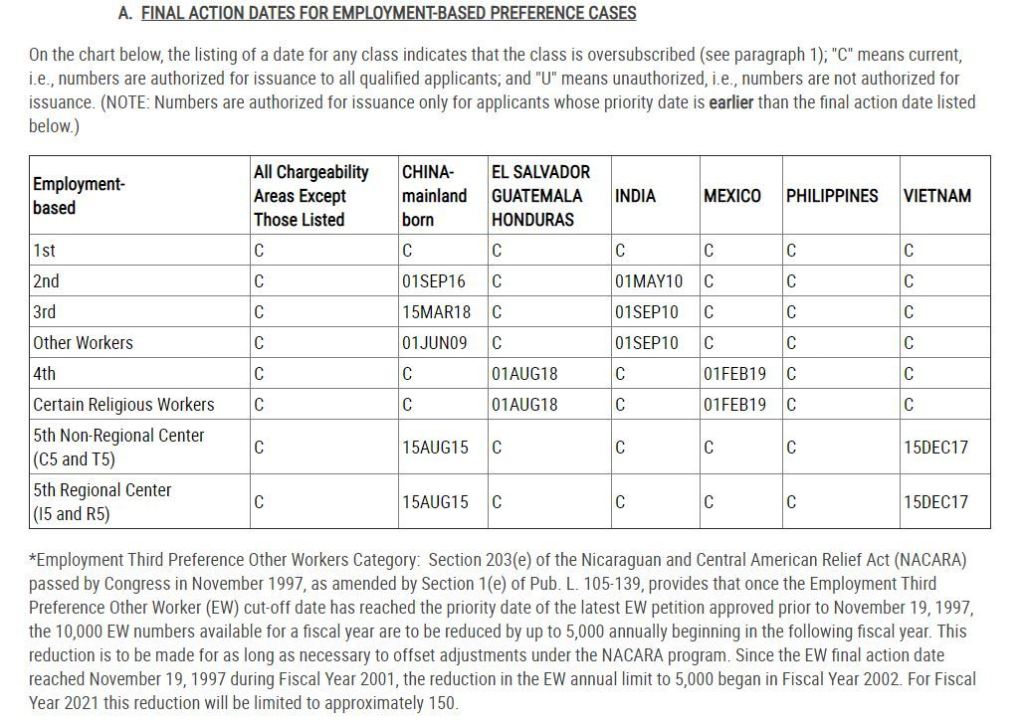
We have some good news: All EB-5 investors outside of China and Vietnam have maintained their “current” status on their final action dates, including India, whose status became “current” in July 2020. Unfortunately, the outlook remains unchanged for EB-5 investment participants from China and Vietnam. The final action date for China has remained fixed at August 15, 2015, since the publication of the August 2020 bulletin. Wait times actually continue to increase for Chinese investors as they enter month eight of inaction on that final action date.

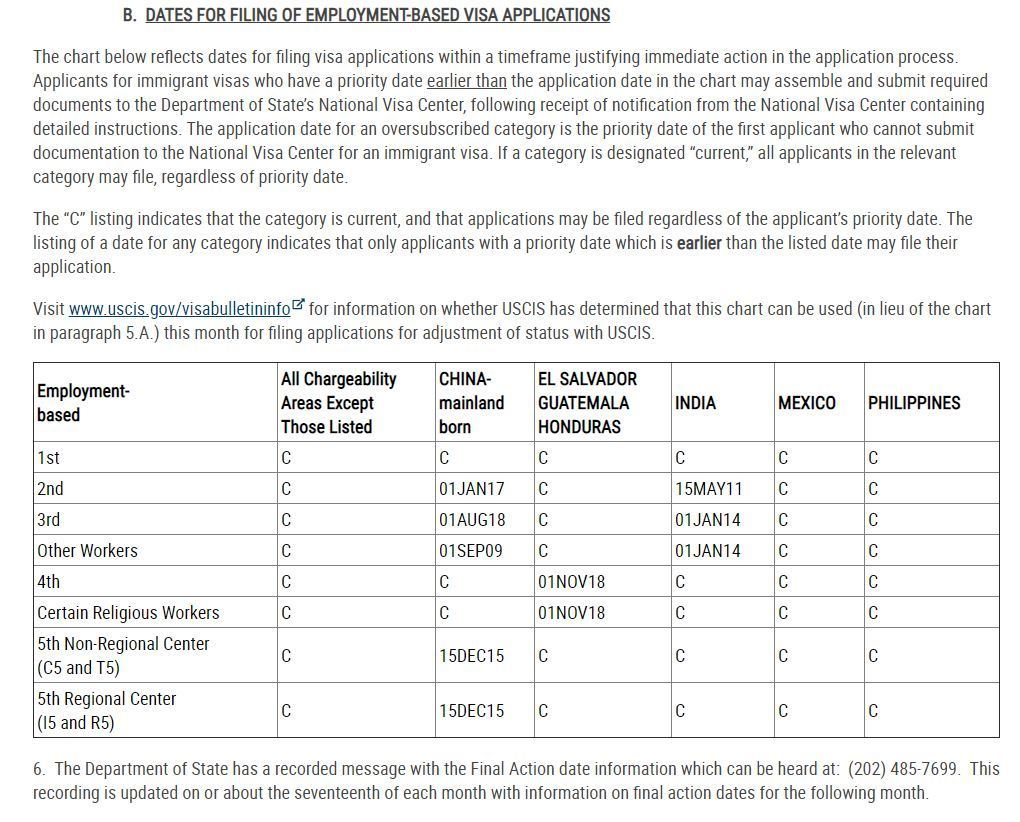
Furthermore, the date for filing on Chinese petitions hasn’t changed either, holding steady at December 15, 2015, for a year now. Vietnam shows a little more progress than that as it inches forward another two weeks from the February 2021 bulletin.

Industry experts are still baffled about why the increase in EB-5 visas allocated for the year hasn’t improved these backlog issues at all. There wasn’t much hope at the publishing of February’s bulletin, and unfortunately, USCIS’s song remains the same for another month. If anything, recent history has proven that circumstances can change at a moment’s notice, but right now, there aren’t any visible signs of a shift for the better.

Free EB-5 Project Evaluation

Considerations for EB-5 Redeployments After July 2020 Policy Alert

Considerations for EB-5 Redeployments After July 2020 Policy Alert-min

The EB-5 Immigrant Investor Program has remained a favorite U.S. immigration program among foreign investors since its inception in 1990, promising U.S. green cards for a qualifying investor and their immediate family members upon the completion of a successful EB-5 investment that creates at least 10 new jobs for U.S. workers. With EB-5 demand particularly surging in China, Vietnam, and India, it is the program’s popularity itself that presents complications, since only a limited number of U.S. green cards are allotted to the program annually.

To partake in the EB-5 program, an investor must inject the minimum required EB-5 investment amount in their selected new commercial enterprise (NCE), which, in turn, consolidates the EB5 investment funds from all participating investors and funnels it into a job-creating entity (JCE), usually for a term of five years. Until 2014, this arrangement worked smoothly, with EB-5 investors fulfilling EB-5 requirements and exiting the investment by the end of the five years. However, newfound popularity in 2014 led to skyrocketing EB-5 demand that the relatively low annual supply of EB-5 visas wasn’t equipped for. The result was massive backlogs in countries such as China, Vietnam, and India, with China and Vietnam still backlogged as of December 2020. With backlogs elongating processing times, it wasn’t long until the five-year investment term was insufficient for some EB-5 investors to satisfy the program requirements.

Since one of the key EB-5 program requirements is that EB-5 investment funds remain at risk throughout the full investment period, EB-5 investors who have failed to meet EB-5 requirements by the end of five years have no choice but to redeploy their EB5 investment capital. Failure to redeploy would constitute a violation of EB-5 requirements, as the investor’s capital would no longer be at risk.

EB-5 redeployment is further complicated by legal requirements governed by the U.S. Securities and Exchange Commission (SEC), which serves to protect domestic and foreign investors alike in U.S.-based securities offerings. When the Investment Companies Act of 1940 and the July 2020 Policy Alert from United States Citizenship and Immigration Services (USCIS) are added to the mix, it’s clear that NCEs have a number of legal hurdles to navigate in executing EB-5 redeployments.

Problems with Investor Advisers

The Advisers Act rules that a general partner or managing member of the NCE may act as a “private fund adviser,” in which their reporting obligations differ somewhat from those of other fund advisers. Private fund advisers are permitted in EB-5 redeployments, but the level of regulation depends on whether the adviser is offering advice to the entire body of limited partners based on the objectives of the NCE or to individual EB-5 investors based on their individual goals.

The SEC has stated it will not take action if a private fund adviser offers advice to the NCE’s limited partnership, as they will be seen as furthering the objectives of the NCE and not the investors. A private fund adviser may also inquire as to whether a limited partner would prefer distributions to be paid out in cash or in kind, but they would be prohibited from offering advice or otherwise attempting to sway the limited partner’s decision in either direction. Were the private fund adviser to take such action, they would be subject to additional SEC regulation.

Exemptions under the Investment Companies Act of 1940

In most NCEs, the majority of assets comprise of a promissory note representing the deployment of EB-5 investment capital to the JCE, which classifies most NCEs as investment companies under the Investment Companies Act of 1940. To participate in the EB-5 program, most NCEs must thus fall into one of two key exemption categories within the act: Section 3(c)(1) or Section 3(c)(5)(C). Section 3(c)(1) stipulates that a securities issuer will not be considered an investment company if it has fewer than 101 investors and does not offer its securities publicly, while Section 3(c)(5)(C) exempts securities issuers whose promissory note is secured by qualifying real estate assets.

Under which section an NCE’s exemption is granted is irrelevant, but what is important is that the exemption still stands at the time of redeployment. Since the NCE’s circumstances may change with time, when it wishes to redeploy EB5 investment funds, it must determine whether it still satisfies the requirements of its exemption. If not, it must determine whether another Investment Companies Act exemption could apply.

USCIS’s Policy Alert

USCIS cannot override the regulations of the SEC or the Investment Companies Act of 1940, so no matter what, NCEs and investors must adhere their rules. USCIS regulations come next, and in July 2020, USCIS released a new Policy Alert on EB-5 redeployments.

According to the Policy Alert, any redeployment must be through the same NCE for the purposes of furthering the NCE’s objectives. If the investor is working with an EB-5 regional center, their redeployment must additionally be through the same regional center. However, the JCE need not be the same, and the commercial activity and location of the project are also permitted to differ. EB-5 investment capital initially deployed in a targeted employment area (TEA) may even be redeployed in a new area that does not qualify for TEA status.

Free EB-5 Project Evaluation

Is the United States Doing Enough for Hong Kong EB-5 Investors?

Is the United States Doing Enough for Hong Kong EB-5 Investors

The Hong Kong Autonomy Act is a sanctions package designed to penalize banks that conduct business with Chinese officials and was recently passed in the United States by Congress. These measures were a response to China’s enactment of the new Hong Kong security law—a piece of Chinese legislation that governing bodies across the globe condemn as an offense against democratic freedoms. While Congress’s actions are a solid counter-message to Beijing, there are a myriad of tools available that haven’t yet been used by the U.S. federal government. One is the EB-5 Immigrant Investor Program.

What the EB-5 Program Does for the U.S.

The EB-5 Immigrant Investor Program is a U.S. economic development initiative introduced in the 1990s Congress that, today, is a driver of billions of dollars in EB5 investment in U.S. markets across the country. This investment-for-residency program focuses on the needs of rural and high-unemployment areas. Eligible foreign investors can obtain U.S. green cards for themselves and their qualifying family members by infusing minimum required EB-5 investment capital amounts ($1.8 million, or $900,000 when investing in a targeted employment area, or TEA) in program-approved projects in line with EB-5 guidelines.

According to 2019 study data by Economic & Policy Resources, the EB-5 program garnered more than $55 billion in EB5 investment capital and was responsible for creating more than 355,000 jobs in 2019. As the Congressional Budget Office attests, the program’s most appealing aspect is that it operates with “no significant cost to the federal government” and at no cost to the taxpayer. This is because the program is designed such that it is EB-5 investment participants who pick up the tab.

U.S. Congress’s Untapped Potential

The current political climate in China creates the perfect opportunity for the U.S. Congress to tap into the potential synergy between Hong Kong and the United States. Further reformation on the EB-5 program to make it easier and more attractive for Hong Kong residents to invest will not only help them escape the heavy hand of the Chinese government but also aid the U.S. economy in job creation at a time when the country needs it most.

This is a win-win scenario that could positively impact both Hong Kong and the United States if Congress can enact consensus-based reforms quickly. Congress has the potential to drive home its democratic message to Beijing, draw in Hong Kong’s best and brightest, and stimulate the economy through the creation of thousands of new U.S. jobs all in one fell swoop.

Proof of Concept for a Hong Kong Focus

The United States isn’t the only country willing to support Hong Kong’s efforts. There are a number of nations with competitive investment programs around the globe helping the region’s people, including the United Kingdom and Canada.

The UK Grants Hong Kong Residents Renewable Visas

Approximately 350,000 Hong Kong residents are reported to currently hold a British overseas passport, and more than two million more are eligible to apply for one. British Prime Minister Boris Johnson made an announcement that Hong Kong residents who wish to apply may be granted renewable visas. Holding a renewable visa would allow them to hold UK employment and would set them squarely on a path to citizenship in the UK.

Canada’s Foresight Has Garnered a Return in Spades

More than two decades ago, Canada prepared for the end of British rule in Hong Kong by using its residency-by-investment program as a welcome mat for entrepreneurs and business professionals from Hong Kong. The results?

  • Billions of foreign investment dollars that literally and figuratively transformed Vancouver and other areas of British Columbia into thriving international hubs
  • An entire generation of talented and well-educated innovators and job creators who continue to positively contribute to the country’s economic growth

So why isn’t the United States following suit? What are U.S. officials currently doing instead? Let’s take a look at why the U.S.’s EB-5 Program isn’t currently the most attractive offer on the table in Hong Kong.

What’s Happening with EB-5-Related Legislation

It’s worth repeating: the EB-5 program isn’t the most attractive offer on Hong Kong investors’ tables right now. And now, in 2020, the federal government has made the U.S. option even less attractive. President Trump signed off on the Hong Kong Normalization Order—a policy for the United States to suspend or even eliminate the preferential treatment of Hong Kong over mainland China. This made it even more difficult for Hong Kong residents to participate in EB5 investments than before.

The July 2020 executive order has subjected Hong Kong EB-5 investment applicants to the extensive backlogs Chinese investors have been dealing with for years, likely adding years to Hong Kong investors’ EB-5 journeys. The United States is already host to more Hong Kong immigrants than any other country outside of mainland China and is a leading source of inbound EB-5 investment capital. Yet, it is still only a fraction of Hong Kong’s financial resources.

Common Sense Reforms to Strengthen EB-5 Appeal

It only makes sense to better EB-5 investment opportunities for Hong Kongers. The only way forward in reinvigorating interest among Hong Kong investors is the repeal of counterintuitive actions such as the Hong Kong Normalization Order, as well as further reform. If not, the United States can only expect to lose desperately needed Hong Kong investment capital and talent to more attractive markets like Canada, Singapore, the United Kingdom, and Australia.

Common sense reforms from Congress are a viable way to avoid this. Two creative ideas floating around the EB-5 community are as follows:

  • Enact a requirement for Hong Kong EB-5 investment capital to apply only to rural areas or targeted employment areas (TEAs). This would spur on economic development in regions where it’s needed most and avoid investment concentration issues.
  • Establish a temporary fast-track for processing Hong Kong investors. Exempt them from the annual visa caps that would normally apply during such this urgent time in Hong Kong. This is the type of reform that could upstage competitive offerings.

What’s most heartening is it seems that there are congressional figureheads who have suggested they are poised to support any efforts to assist Hong Kong. Specifically, they support reforms, sanctions, and aspects of a recovery bill that address how the EB-5 program would reinforce cornerstone principles of democracy, economic opportunity, and freedom, sending a very strong message to China and the rest of the world.

Free EB-5 Project Evaluation

Decreased I-526 Volume Offers a Chance to Reduce EB-5 Backlogs

Decreased I-526 Volume Offers a Chance to Reduce EB-5 Backlogs

According to statistics pulled from the United States Citizenship and Immigration Services (USCIS) data for FY2020 Q4 (July–September 2020), new I-526 receipts at the immigration body are the lowest they’ve been in years. While it’s easy to see diminished demand as a reason to steer clear of the EB-5 Immigrant Investor Program, it may actually be an ideal time to dive into an EB-5 investment. Many of the problems that have plagued the residency-by-investment program throughout the 2010s can be traced back to the lengthy backlogs for investors from select countries, and a decrease in new demand offers a chance to reduce the backlogs.

What Does the Data Say About I-526 Petition Receipts?

The USCIS data makes clear the decrease in I-526 receipts compared to most years in the 2010s, with the exception of FY2019. A record-low year in many regards for the EB-5 program, FY2019 saw only 4,194 new I-526 petitions filed, meaning FY2020’s 4,378 represents a 5% increase.

A spike in filings in the first quarter of FY2020 is also clear. The Modernization Rule, which came into effect on November 21, 2019, pushed up the minimum required EB5 investment amounts by 80%, raising the regular amount from $1 million to $1.8 million and the targeted employment area (TEA) amount from $500,000 to $900,000. With more than 97% of all FY2020 I-526 receipts being filed in the first quarter, it’s clear a deluge of applicants jumped on the chance to secure an EB-5 investment at the lower amount.

Unforeseen at that time was the COVID-19 pandemic, which continues to devastate the globe even now in February 2021. Temporary suspensions at U.S. embassies and consulates, coupled with strict lockdowns and the general shutdown of public life around the globe, are expected to have also contributed to the sudden decrease in new I-526 petitions. USCIS received only 114 I-526 petitions throughout the three remaining quarters of the fiscal year.

Adjudications of I-526 petitions also fell in FY2020, but not as starkly as receipts. The EB5 investment world has grown used to a snail’s pace at the Immigrant Investor Program Office (IPO) under Sarah Kendall’s leadership, with the FY2019 figures falling dramatically from all-time highs in FY2018 even without a pandemic wreaking havoc on the world. FY2020 I-526 adjudications were down 27% from even FY2019 numbers, but the good news is that they are trending upward, with FY2020 Q4 exhibiting the highest number of I-526 adjudications since FY2019 Q1. The ratio of approvals to rejections is also trending favorably, with the 79% of approved petitions in FY2020 Q4 up from 62% in the previous quarter.

In terms of the seemingly endless backlogs at USCIS, the flood of new I-526 receipts in FY2020 Q1 had a substantially negative effect. USCIS closed out FY2019 with 13,763 petitions stuck in the backlogs, but the rush to beat the increased minimum EB-5 investment amounts in FY2020 Q1 pushed the figure to 17,468. The almost complete cessation of new filings throughout the rest of the year allowed USCIS to reduce the number to 15,063, but the agency still has a long way to go to eliminate the backlogs.

How EB-5 Investors Can Benefit

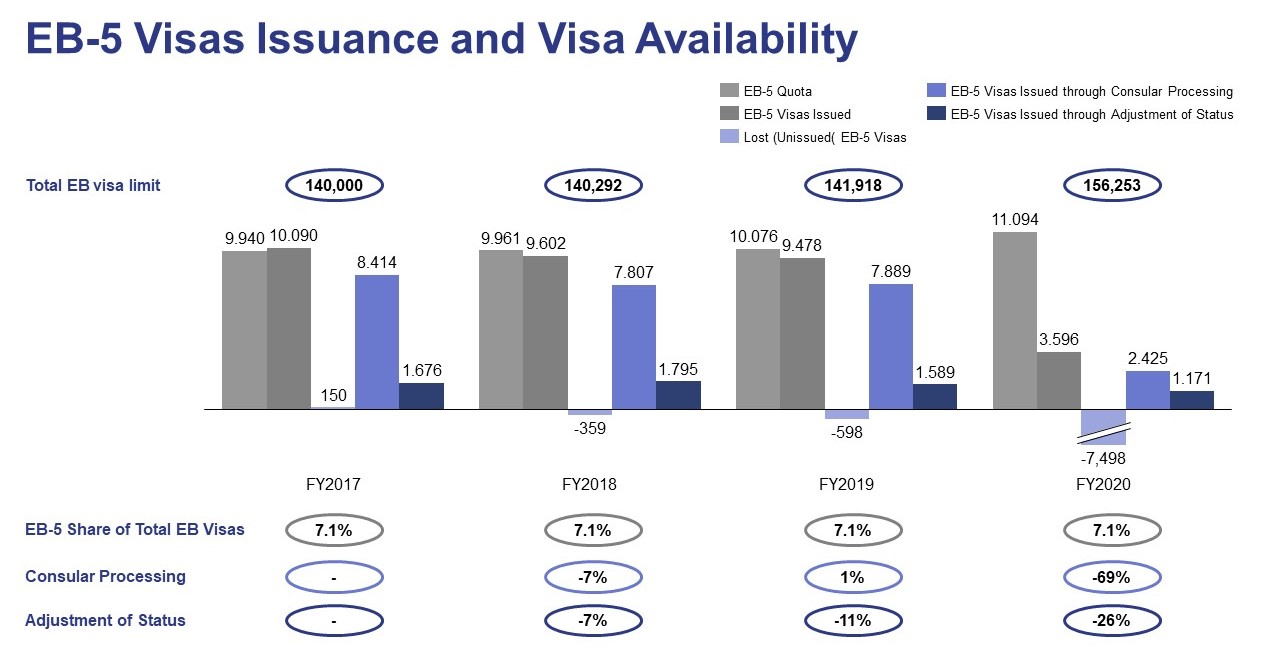
A time of diminished interested in the EB-5 program may actually be the perfect time to jump into an EB5 investment. Fewer I-526 petitions means less competition and more EB-5 visas available for an investor and their family members, resulting in a faster EB-5 journey. The EB-5 outlook in FY2021 is particularly favorable for new applicants considering an EB-5 investment, with the scores of unissued visas in FY2020 resulting in thousands being rolled over to the EB-5 program in FY2021. With 18,567 visas allocated to the EB-5 program, the IPO can dish out more than double the usual number of EB-5 visas in FY2021. This massive increase allows the country caps to increase to around 1,300 visas, presenting USCIS with a unique opportunity to cut down the Chinese and Vietnamese backlogs. Leftover visas, which could be as many as 7,000–8,000, could go to Chinese and Vietnamese nationals who have been left in processing purgatory for years.

Naturally, this situation is advantageous to those already engaged in an EB5 investment but stuck in backlogs, but it also offers benefits for new EB-5 investors. In particular, cutting down the massive Chinese backlog could substantially reduce estimated waiting times for new EB-5 investors from China, and if few Chinese peers similarly make EB-5 investments going forward, the situation will be even more favorable.

FY2021 essentially presents USCIS with a chance to “catch up” on the backlogs that have prevailed since 2014. With almost double the average number of yearly EB-5 visas and record-low interest, it’s unlikely the EB-5 program will ever see another opportunity like this again. Though many foreign investors are shying away from an EB5 investment, it may, in fact, be the best time to get involved with the EB-5 Immigrant Investor Program.