



Author Archives: admineb5

Free EB-5 Project Evaluation

EB-5 Heading into 2021: COVID-19 Vaccines and Regional Center Program Sunset Date

EB5-Heading-into-2021-COVID19-Vaccines-and-Regional-Center-Program-Sunset-Date

2020 has been an unprecedented year for everyone, with almost no one on the planet left unaffected by the COVID-19 pandemic. The virus and the subsequent government measures to contain it have upturned economies, destroyed livelihoods, torn apart families, and ended lives. The EB-5 Immigrant Investor program has not escaped COVID-19’s wrath, either, as the pandemic-induced suspension of routine visa services at U.S. embassies and consulates left countless EB-5 investors stranded indefinitely with no pathway to enter the United States.

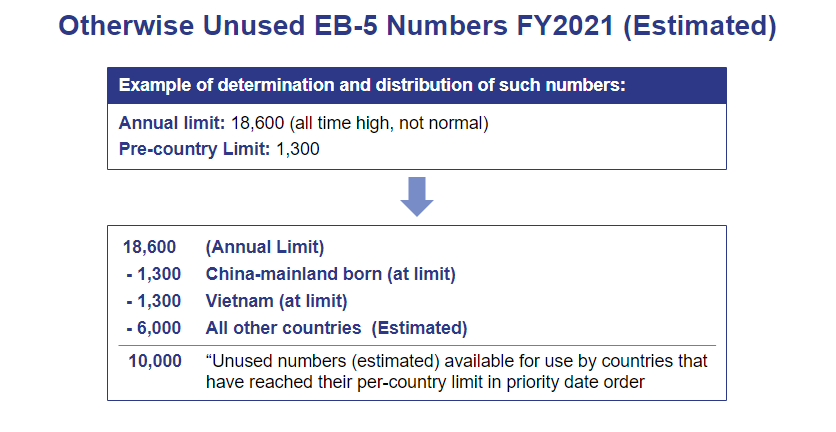
Surprisingly, the pandemic has also aided the EB-5 program in various ways. For example, the near-total shutdown of immigration also resulted in a lack of family-based visas being issued in FY2020, which saw thousands of unused visas roll over to the EB programs for FY2021. Entitled to 7.1% of all EB visas in a given year, the EB-5 program has been allocated more than 18,000 visas for FY2021 – nearly double the typical number.

With 2020 having been the most unpredictable year in recent history, it’s difficult to foresee what 2021 will bring. The COVID-19 virus still lingers in the air, threatening to further pause public life, so until an effective vaccine is widely distributed, life cannot return to normal as we know it. Below are a couple factors that could influence the EB-5 program as we tumble into 2021.

EB-5 Regional Center Program Sunset Date Fast Approaching

2020 has been the year of the unpredictable, and little would be more unpredictable in the EB-5 program than the discontinuation of the EB-5 Regional Center Program. A temporary program that has been subject to continuous reauthorizations since its debut, the EB-5 Regional Center Program allows foreign nationals to make an EB-5 investment through a qualified regional center rather than directly in an eligible EB-5 project, enabling the pooling of EB5 investment capital for maximum economic stimulation and job creation. Regional centers are heavily favored by EB-5 investors for the relative security they provide, including through relaxed job creation requirements, but until the program is made permanent, it will undergo constant review and reauthorization from the U.S. government.

On December 11, 2020, the Regional Center Program was extended by a single week until December 18, 2020. Throughout the week, Congress engaged in discussions to pass the federal funding bill in which the Regional Center Program reauthorization is included. If the bill fails to pass, a government shutdown will ensue, and the Regional Center Program may expire. Given that the bill likely includes stimulus checks and various forms of aid for struggling small businesses and U.S. workers who have lost their jobs due to the pandemic, it is a complicated matter for Congress, and it’s entirely possible that Congress will pass another short-term extension to win more time for negotiations.

COVID-19 Vaccines to Favor Developed Countries

With COVID-19 vaccines approved by major countries such as the United States, Canada, and the United Kingdom, the world can finally see the light at the end of the long, dark tunnel constructed by the COVID-19 pandemic. With these three countries having already administered their first doses of the highly anticipated vaccine, 2021 is lining up to be a better year than 2020.

However, not all countries will have equal access to a COVID-19 vaccine. While many developed countries have already purchased abundant supplies of the perceived panacea, some developing countries lack the funds and resources to secure doses for their own populations. They can take advantage of excess vaccines redistributed by developed countries and the World Health Organization, but any delays will leave a country in the economic dark longer, and developed countries will inevitably have earlier access to COVID-19 vaccines.

The United States, which leads the world in medical innovation and research, has produced five of the most promising COVID-19 vaccinations, pumping them out at record speed thanks to the billions of emergency dollars funneled into research and development. Naturally, any US-produced vaccinations will be made available to all countries to quash the pandemic globally, but only after the United States has already secured sufficient doses for its own population.

Early access to vaccinations for developed countries presents two opportunities for the EB-5 program. First, with vaccines secured and beginning to be rolled out, it’s time for countries like the United States, Canada, and the United Kingdom to unleash their economic recovery plans. In the United States, the foreign capital from EB5 investments can aid countless companies as they rebuild or help brand-new businesses gain footing in this unstable environment, accelerating the economic recovery and producing new, full-time jobs for the millions of newly unemployed Americans.

The other important role the EB-5 program can play in 2021 is benefiting foreign investors from developing countries. Countries like China, India, and Vietnam may not have the same widespread access to COVID-19 vaccines as the United States, rendering a U.S. green card all the more appealing. Investors the world over may opt to make an EB-5 investment so they can move their life to a highly developed country with the world’s leading economy, state-of-the-art medical facilities, and a strong and early recovery from the debilitating effects of the COVID-19 pandemic.


Free EB-5 Project Evaluation

Bill S.386 May End the Country Cap on EB-5 Visas

Bill-S.386-May-End-the-Country-Cap-on-EB-5-Visas

Since the dawn of United States Citizenship and Immigration Services (USCIS), most immigration programs have been subject to country caps—in other words, only a limited number of visas can be allocated to applicants from a given country in a given fiscal year. Considering the stark population differences among countries—China and Grenada are hardly comparable—this practice has unfairly disadvantaged immigrant hopefuls from high-population nations. The EB-5 Immigrant Investor Program is no different, with EB-5 investment applicants from high-demand countries facing longer wait times due to these country caps.

Every fiscal year, approximately 10,000 visas are allocated to the EB-5 program, representing 7.1% of all EB visas for that year. Among these 10,000 visas, no one country is entitled to more than 7.1%, which amounts to around 700 visas per country. Since applicants can use their EB5 investment to obtain U.S. green cards for their spouse and dependent children as well, the yearly limit of 700 EB-5 visas per country only allows around 300 to 400 immigrant investors per country to start their new, promising life in the United States.

Bill S.386 Offers Hope for Ending the Country Cap

In July 2019, the U.S. government took the first step toward eliminating the discriminatory country caps in the EB-5 program and other U.S. immigration programs by introducing Bill S.386, also known as the Fairness for High-Skilled Immigrants Act of 2019. In 2020, a new version of the bill—Bill H.R.1044 – Fairness for High-Skilled Immigrants Act of 2020—was introduced, and on December 2, 2020, it was passed in the Senate, edging ever closer to the dissolution of USCIS country-based visa limits.

Passing in the Senate is significant, but for a bill of this magnitude, it’s not sufficient to enact the changes. The bill has been sent to the House of Representatives and must gain the approval of both houses to continue. Finally, should both houses pass the bill, it will proceed to President Trump’s desk for a signature, which will officially set it in motion. With broad support from both parties and Vice-President-Elect Kamala Harris as an original cosponsor, Bill S.386 stands a promising chance of passing and ushering in the transformation of U.S. immigration.

What Does the Bill Entail?

If passed, Bill S.386 could redefine the entire EB-5 landscape. The bill would see the country caps on employment-based visas almost completely eliminated, subject to a few conditions. A percentage of the available visas would be reserved for foreign nationals not from the two countries with the largest number of recipients, which, for the EB-5 program as of December 14, 2020, are China (including Hong Kong) and Vietnam. Of the unreserved visas, no more than 85% would be allowed to go to a single country. The passing of this bill represents a significant opportunity for those from China with EB-5 investments, and further improving the situation for Chinese immigrants is the bill’s eradication of an offset that reduces the number of visas that can be issued to Chinese individuals.

If this bill is passed, it will effectively almost void the visa availability processing approach that USCIS adopted in April 2020. The visa availability approach prioritizes the I-526 petitions of applicants from countries with readily available visas and has primarily disadvantaged Chinese investors. If the country caps are removed, significantly more EB-5 visas will be available to Chinese investors, reducing their disadvantage under the visa availability approach.

Free EB-5 Project Evaluation

EB-5 Regional Center Program Extended One Week to December 18, 2020

EB-5-Regional-Center-Program-Extended-One-Week-to-December-18-2020

The EB-5 Immigrant Investor Program is one of the most popular U.S. immigration paths for foreign investors, attracting millions in foreign investment capital to the United States each year. The EB-5 program offers investors two pathways to obtain U.S. green cards for themselves and their immediate family members: direct investment in a qualifying EB-5 program, which entails direct involvement in the day-to-day management of the new commercial enterprise (NCE), or investment through an EB-5 regional center, which relieves the investor of the burden of intensive managerial work.

By far, the regional center route is the more popular one—not only does it offer more freedom, allowing applicants to infuse EB-5 investment capital into an EB-5 project in Florida, for example, yet to settle in New York, but it also loosens the requirements for job creation, making it easier to obtain U.S. permanent resident status.

The only problem is that the EB-5 Regional Center Program is not a permanent U.S. government program. While the Direct Investment Program has been made permanent, the Regional Center Program continues to need periodical reauthorization from the U.S. government. Since its inception, the program has been granted short-term extensions through its inclusion in government funding bills.

Previously, the Regional Center Program was set to expire on September 30, 2020, but Congress breathed new life into it until December 11, 2020. Failing to negotiate funding and legislation for 2021 within the two-and-a-half-month period, Congress extended the Regional Center Program by another week until December 18, 2020, giving them extra time to work out a solution for 2021.

Given the popularity of the Regional Center Program and the efficacy of the EB-5 program in pumping EB5 investment capital into the U.S. economy and stimulating job growth in targeted employment areas (TEAs), it’s highly unlikely that the program will be discontinued. However, until the Regional Center Program is finally made permanent, the EB-5 industry will be required to keep up to date on Congress’s frequent extensions of the program.

Free EB-5 Project Evaluation

H1-B Visa Applicants: Why Staying the EB-5 Course May Be Best

H1B-Visa-Applicants-Why-Staying-the-EB5-Course-May-Be-Best

The last two years saw H1-B visa candidates flocking to the EB-5 Immigrant Investor Program, thus creating a niche domestic market for developers involved in the EB-5 program. Part of the reason was that visa retrogression drove investors such as those from India to turn to the EB-5 program as a faster alternative route on their journey to U.S. permanent residency status. That may be changing, however.

Following the release of the October 2020 Visa Bulletin by the Department of State (DOS) in late September, there are rumblings among these niche investors. It seems they may be a bit more hesitant when considering the EB5 investment program. In large part, the shift is due to a significant date jump in employment-based EB-2 and EB-3 visa categories. The change may give the impression that extended wait times for visas are nearing an end. This is not necessarily true.

Yes, Dates for Filing (under Chart B) have vaulted. EB-3 dates, for instance, advanced from February 2010 to January 2015, while EB-2 dates jumped from August 2009 to May 2011. Yet Final Action Dates (Chart A) have advanced only by mere months. This is welcome news among India-born applicants, but there are still a number of important factors to consider.

Read on to learn more about the significance of these date advancements and to understand other key considerations when making decisions about which visa program makes the most sense for your unique circumstances.

Why These Visa Bulletin Date Advancements Are Significant

When it comes to immigrant visa processing, DOS has focused on two cut-off dates since late 2015: the Final Action Dates published in Chart A, and the Dates for Filing published in Chart B. When an applicant has a priority date that is current under Chart B, they and their eligible family members are allowed to apply for an adjustment of residency status. Upon filing their I-485 petition for adjustment of status along with an I-765 and I-131, they become eligible for unrestricted employment authorization (EAD) and advance parole (AP) for travel within 90 days. USCIS currently issues an authorization card including both employment and travel.

While a shift in dates shown in the October 2020 Visa Bulletin is significant, the most exciting news embedded in the changes is that USCIS is accepting I-485 petitions at all. In the last five years, USCIS has rarely used Chart B. The acceptance of these filings will allow new levels of flexibility among EB-2 and EB-3 applicants and their families outside of simply extending an H1-B visa for another term. How so? Within 180 days of approval, they would be allowed to change employers as long as they stay in a similar occupation.

That said, there are still important considerations for EB-2 and EB-3 applicants to make when reevaluating their immigration plans. There are a number of key issues to keep in mind.

What to Make of the Jump in Chart B

USCIS guidelines dictate that Chart B becomes available to applicants already inside the U.S. who wish to adjust their residency status only when more immigrant visas are available than there are applicants in a given fiscal year. In such an unprecedented year—a pandemic and the subsequent closures and delays in USCIS and U.S. Consulate processing on a global scale—we can only speculate that the numbers are skewed. We may see a correction or even a retrogression over the next few years as we navigate back to some sense of normalcy.

Another major contributing factor to the date changes was likely the start of the new fiscal year on October 1, 2020. This creates the possibility of stasis in the Visa Bulletin over coming months.

I-485 Applicants and Further Green Card Delays

Even as there has been significant advancement in dates under Chart B for EB-2 and EB-3 applicants, Chart A dates moved only slightly in these categories. What is certain is that the October 2020 Visa Bulletin’s Chart B allows I-485 petitions to be filed. It is also certain that each I-485 application for an adjustment of status will be placed in a queue until the applicant’s priority date is listed as current in Chart A.

From there, when an applicant’s Final Action Date is current under Chart A, a USCIS adjudicator will take up their Form I-485 to determine eligibility for permanent residency. An approval at this time signals an applicant is eligible for a green card. However, the dates in Chart A can be many years away for a significant number of applicants. In turn, so could their green cards be further delayed.

When Child Applicants Are Waiting on Chart A

USCIS guidelines also say that Chart A is what determines the date for calculating a child’s age. This means a child applicant must wait for their parents’ priority date under Chart A to reach current status before their eligibility for a green card may be determined. While the Child Status Protection Act (CSPA) does allow a child applicant under 21 to freeze their age once their I-140 petition has been filed, once it is approved, the child’s age clock begins to run again. So, when there are significant backlogs on Chart A under the EB-2 and EB-3 categories, there is an increased risk of the child aging out prior to receiving a green card.

Downgrading from an EB-2 to an EB-3 May Be Risky

It’s true, the EB-3 date under Chart B advanced five years and EB-2 dates advanced only two years. And this seems to have been a catalyst for downgrades as a strategy. While downgrading from EB-2 to EB-3 status seems to be trending among Indian nationals since these date changes, EB-2 applicants may want to think twice before making the shift. Should applications to downgrade be submitted en masse, the result is likely to be a further backlog in Chart A under the EB-3 category. Additionally, a downgrade will require a new I-140 submission, which has the potential to increase the risk for children who may be close to aging out already. Furthermore, we imagine a sudden influx of EB-2 applicants away from the program could shift dates ahead of the EB-3 category.

Proposed Increases in Filing Fees and a Flurry of Applicants

Early in the fall of 2020, USCIS announced its intentions to implement fee changes, which included increases on a number of applications and petitions. While the fee increases were delayed past the October 2, 2020 date, by the end of the month the new fee schedule was in effect. Now, an additional fee is required for Forms I-765 and I-131, which accompany an I-485 petition ($490 and $585 respectively). In light of the new acceptance of I-485 applications beginning October 1, thousands of applications poured in to beat the fee increase later in the month. This could lead to processing chaos that won’t be unearthed for months yet.

Why H1-B Candidates Should Continue the EB-5 Investment Process

Further delays in final action dates. Some immigrant applicants scrambling to downgrade from EB-2 to EB-3. Others who attempted to beat the fee increases. All of these reasons and more are good ones for EB-3 or EB-2 applicants who have chosen the EB-5 investment journey to stay the course. For Indian-born EB-5 investors with priority dates that are not close to 2009 or 2010, the EB-5 program is still the faster option.

While withdrawal may seem an attractive option right now, it is important to consider the bigger picture before shifting your path again. It could be years still before you receive an EB-2 or EB-3 green card if that is the route you take. If you still feel a change is your best option, it is always advisable to seek experienced legal counsel to ensure your immigration goals for you and your family are ultimately met.

Free EB-5 Project Evaluation

A Basic Overview of the EB-5 Immigrant Investor Program

Basic-Overview-of-the-EB-5-Immigrant-Investor-Program

The EB-5 Immigrant Investor Program, an employment-based U.S. immigration program established in 1990, has been offering foreign investors a valuable opportunity to obtain permanent resident status in the United States for decades. It was designed to be mutually beneficial to foreign investors and the U.S. government—in exchange for a hefty EB-5 investment in a new commercial enterprise (NCE) that results in job creation and economic stimulation, a foreign national and their immediate family members are granted permanent resident status in the United States. Given the numerous benefits of U.S. permanent residency, including easier access to world-renowned educational institutes, state-of-the-art health-care facilities, and unparalleled freedom, foreign investors from around the world have flocked to the program.

Minimum Investment Amount

The EB-5 program stipulates a minimum EB5 investment amount that investors must satisfy to be eligible for a U.S. green card. For nearly 30 years following the program’s creation, the minimum investment amount was maintained at a clean $1 million, with targeted employment area (TEA) projects qualifying for a lower minimum investment amount of $500,000. The EB-5 program then suffered a severe blow in November 2019, when the Modernization Rule came into effect and increased the minimum investment amounts to $1.8 million for non-TEA projects and $900,000 for TEA projects.

A TEA project is an EB-5 project located in a high-unemployment or rural area. By incentivizing EB-5 investment in more deprived areas through a lower required investment amount, the U.S. government hopes to foster the economy in areas that stand to benefit more from the infusion of foreign capital. A high-unemployment TEA is defined as an urban area with an unemployment rate at least 150% that of the national average, while a rural TEA is classified as an area with fewer than 20,000 inhabitants.

Key EB-5 Investment Requirements

The EB-5 program is open to foreign investors from any country, and they are also welcome to apply for U.S. green cards for their spouse and unmarried children under the age of 21. To successfully complete their EB5 investment and obtain permanent resident status in the United States, however, investors must fulfill a number of requirements:

  • The investor must prove that they have injected the relevant minimum investment amount into the EB-5 project—$1.8 million for a non-TEA project or $900,000 for a TEA project.
  • The investor must provide documentation that shows the legal sources of their EB-5 investment capital.
  • The investor must maintain their EB5 investment in the NCE for the entire two years of their conditional permanent residency period, keeping it at risk the entire time.
  • The investor must demonstrate that their EB-5 investment has created at least 10 new, full-time jobs for U.S. workers lasting at least two years.

Investing through an EB-5 Regional Center

Prospective EB-5 investors must make a choice between directly investing in their chosen EB-5 project and investing through a qualifying EB-5 regional center. While both paths offer certain benefits, the vast majority of investors prefer investing through a regional center.

Investors with extensive managerial experience who wish to be intensively involved in the day-to-day operations of the NCE tend to be attracted to the direct investment route. This type of EB-5 investment allows them to exercise more control over their capital, potentially resulting in a larger return on investment.

Conversely, investors with less managerial experience or who simply do not want to be heavily involved in the management of the NCE are generally more drawn to the EB-5 regional center route. With a regional center EB5 investment, an investor can usually satisfy the requirement of involvement with the NCE simply by signing on as a limited partner, which gives them the freedom to settle somewhere far away from their project—investing in a project in Fort Lauderdale, Florida, but settling in Seattle, Washington, is entirely possible.

Another key advantage of regional center investment is that it offers relaxed job creation requirements. In direct investments, United States Citizenship and Immigration Services (USCIS) accepts only jobs listed directly on the NCE’s payroll. In contrast, investors working with an EB-5 regional center can count indirect and induced jobs toward the requirement, making it significantly easier to demonstrate the creation of at least 10 full-time jobs.

Ultimately, both paths lead to permanent resident status if the EB-5 investment is successful. Each investor must weigh the pros and cons and determine which option works better for them and their goals.

Free EB-5 Project Evaluation

Answers to 10 Frequently Asked Questions About the EB-5 Program

Answers-to-10-Frequently-Asked-Questions-About-the-EB-5-Program
Participating in the EB-5 Immigrant Investor Program can be one of the most exciting pathways a foreign national can take to permanent residency in the United States. While it is arguably one of the easiest ways for qualified investors to secure U.S. green cards for themselves and their eligible family members, there are a lot of moving parts to this program and its processes. More moving parts invariably give rise to more questions, and that makes sense. Below are answers to 10 of the most frequently fielded questions from potential investors evaluating whether an EB-5 investment is right for them.

Question 1: What’s an EB-5 Visa?

Answer: The EB-5 visa is one of a set of five employment-based immigrant visas. “Visa” is another word for “green card.” In simplest terms, this program is known as a residency-by-investment option. Classification from the top down looks like this: In the United States, green cards are first categorized by immigrant and non-immigrant status. Then, under the immigrant category, there currently exist four types of immigrant green cards. One subcategory is the employment-based visa. There are five different employment-based visa programs, and the EB-5 Immigrant Investment Program is one of them.

Question 2: Is an EB-5 Visa an Option for Me?

Answer: An EB-5 applicant is considered an individual investor, and this program is open to all foreign nationals who have the fiscal means to invest the minimum amount required into a program-approved EB-5 investment project. Because it is one of the quickest paths to U.S. permanent residency and eligible family members – spouses and dependent children – may apply under a single investment, it is often a primary choice for families with access to investment capital.

Question 3: How Can I Get an EB-5 Visa?

Answer: Although the EB-5 process can be time-consuming and a bit more complex under the surface, the basic requirements for securing an EB-5 visa through this program are fairly straightforward and can be counted on one hand:

  • Invest $1.8 million in a program-approved project either directly or with the help of an EB-5 regional center (or $900,000 when the project lies within a designated targeted employment area, or TEA).
  • Ensure your lawfully obtained EB5 investment capital remains at risk for the duration of the EB5 investment period (two years).
  • Prove that the project you have invested in has created and maintained a minimum of 10 new full-time employment positions.
  • Eligible family members who plan to obtain permanent residency in the United States will submit the required petitions at the same time you do.

Question 4: Should I Invest Directly or through an EB-5 Regional Center?

Answer: The answer to this question truly depends upon how involved you’d like to be in the day-to-day operations of your selected project. While the EB-5 regional center program has not been written into U.S. immigration law yet, by far, it is the more popular option among foreign nationals because there are a number of key advantages to investing your EB-5 capital into a regional center.

Generally speaking, working with an experienced regional team is less risky. There is a higher likelihood for locking in on a TEA project that requires half the EB-5 investment amount. How a regional center can meet the job creation requirement also differs – it is more relaxed. And you don’t need to be close enough to the project site to manage daily tasks, unlike with most direct investment projects.

Question 5: How Does Job Creation Differ for Regional Centers?

Answer: The above answer describes the job creation requirement for regional centers as “more relaxed.” EB-5 investors weighing their options may wonder exactly what that means. Whereas a direct investor may only attribute jobs that were added to the project’s direct payroll toward the 10-job minimum requirement, regional centers are allowed greater flexibility in calculating job creation. Indirect and induced jobs may be attributed as long as a reasonable methodology is used to establish job creation.

Reasonable methodologies normally approved by USCIS encompass input–output models that the U.S. government and other reputable entities have used. The methods accepted involve a mathematical estimation for the jobs created and other factors of economic stimuli that can impact a particular sector of an economy (including capital investment).

Question 6: Why Would I Prefer a Direct EB-5 Investment?

Answer: Sometimes a direct EB-5 investment is the ideal option for a foreign national investor. If you have extensive managerial expertise, for instance, and want to continue building your resume, or if you prefer to retain more control over your EB5 investment funds, a direct investment would be a way to ensure these goals are met. Another scenario would be when you already run a business in your country of origin and wish to expand into the U.S. market. There are direct EB-5 investment strategies that may make more sense than working through a regional center.

In either case, it is advisable to reach out to an experienced immigration attorney to determine whether a direct investment is the best way to reach your business goals considering your unique circumstances.

Question 7: Will I Get My EB-5 Investment Capital Back?

Answer: One of the primary requirements for participation in the EB-5 program is that EB5 investment capital must remain “at risk” for the duration of the investment period. While the name of the requirement alludes to investing in risky projects, this is not the case. The central goal of the EB-5 investment program is to strengthen the economy. How do you do that with an investment? By successfully growing the original amount invested.

The actual purpose of the EB-5 “at risk” requirement is to ensure EB5 investment capital is specifically used to fund a new commercial enterprise (NCE) that will create real jobs and stimulate the economy. Ensuring your funds remain “at risk” refers to both the risk of financial loss and the opportunity for financial gain. The specific terms of your investment will be unique and should be clearly outlined in your investment documents – including how you will see your capital (and any gains) returned.

Question 8: How Long Will It Take for Me to Get an EB-5 Visa?

Answer: Hopeful EB-5 investors have heard this program is one of the shortest paths to U.S. permanent residency, but that doesn’t really answer this question, does it? This is because the time it takes to complete the EB-5 process depends on a plethora of variables, including but not limited to:

  • How long an investor spends vetting projects
  • The time necessary to prepare documents for submission
  • USCIS adjudicators’ processing times
  • Post-approval waiting periods on EB-5 visas
  • How long it takes for eligible parties to enter the United States
  • The processing times on USCIS petitions for condition removal

What is certain are the eight steps each investor will pass through on their journey to an EB-5 visa. Learn more about those steps here.

Question 9: Why Do I Have to Wait for My EB-5 Visa After I’ve Been Approved?

Answer: Immigration to the United States is based on a quota system, and there are limits to the number of visas allocated each fiscal year. For the EB-5 program, for instance, approximately 10,000 visas are made available to foreign national investors. However, those visas are further split relatively evenly among participating countries. If demand exceeds supply in a certain country, as with anything, a backlog can manifest. This is why you may be required to endure an additional wait even beyond EB-5 visa approval.

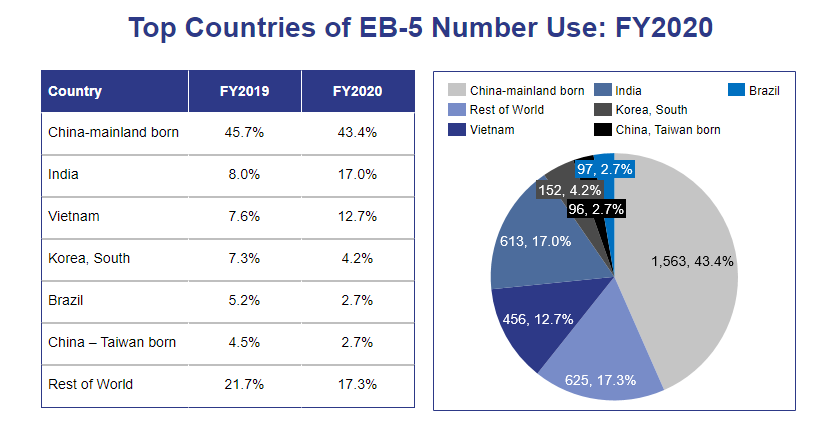
Part of the reason the EB-5 program is so popular is that the backlog for the EB-5 category is relatively recent compared to other green card categories with long-standing backlogs. A bit of recent history: Indian nationals experienced a visa backlog for the first time in July 2019, but after a year of erratic priority date shifts, the India EB-5 backlog became current again (in July 2020) with no additional delays expected. Only two countries are dealing with backlogs as of November 2020 (China and Vietnam).

Question 10: Should I Be Concerned If My Country Is Backlogged?

Answer: If you’re an EB-5 applicant from a country experiencing visa backlogs, there will be an extended wait before obtaining your EB-5 visa after your I-526 petition is approved. Your wait will generally be determined by the number of visa applicants ahead of you in the visa queue. This may become a concern if you are including family members because minor children don’t stop aging while their parent-investor stands in line, so to speak, and children aged 21 and older are ineligible to receive a U.S. green card as the dependent child of an EB-5 investor.

For this reason, in-depth planning with experienced immigration advisors is essential ahead of the decision to participate in the EB-5 investment program. There are strategies an investor can employ (including naming the minor child as a primary EB-5 applicant) during the early stages of investment when aging out could become a concern.

Free EB-5 Project Evaluation

EB-5 Visa Availability According to Charles Oppenheim

EB-5 Visa Availability According to Charles Oppenheim

U.S. Department of State (DOS) Chief of Visa Control and Reporting Division Charles Oppenheim held a virtual keynote address on EB-5 visa availability in mid-November 2020. This webinar followed the opening of the new fiscal year for the EB-5 Immigrant Investor Program, at which time United States Citizenship and Immigration Services (USCIS) allocates its annual visas. Usually, about 10,000 visas go to the EB-5 program.

Generally, these are enough for around 3,000 EB5 investment participants, considering most apply for EB-5 visas for themselves, their spouse, and their eligible dependent children. That said, an unprecedented 2020 has left the EB-5 program holding nearly double its annual allotment. Oppenheim’s robust presentation provided a detailed outlook on where consular processing stands and on how EB-5 visas may be distributed throughout the remainder of FY2021. It held particularly relevant information for EB-5 investment participants from Asian countries, including China, Vietnam, and India.

Especially notable were his thoughts on how consulate activity slowdown is likely to affect FY2021. He also addressed how adjustment of status could be a solution to the bottlenecking of EB-5 visas this year and clues as to why that solution is not likely to be implemented. He discussed several other contributing factors to how he sees the year’s EB-5 Visa Bulletins taking shape as well.

Normal Consulate Activity on EB-5 Investment Visas Yet to Resume

U.S. consulates and embassies the world over experienced temporary closures in the wake of the global pandemic, and in August 2020, reports began to surface of these offices beginning a process of phased reopening. However, Oppenheim has “no idea” when consulates will actually return to a normal level of EB-5 processing activities. Why is this important? Because, as we saw in 2020, EB-5 investment visa distribution hinges on normal consular processing of visa applications.

General EB-5 industry consensus has been that the halt in visa issuance throughout much of FY2020 would naturally result in an influx of available EB-5 visas in this fiscal year. Yet, as the first quarter of FY2021 ends, it seems professional opinions on that prediction are shifting. A continuation of slowed consular operations, for instance, has left Oppenheim estimating that actual EB5 investment visa distribution will be far less than the number of visas theoretically available to EB-5 investors in this fiscal year.

Oppenheim Compares EB-5 Visa Availability to Issuance

Charles Oppenheim provided a number of charts related to EB-5 investment visa issuance data over the last few years to demonstrate how EB-5 visas were distributed over the last fiscal year and this one.


Here are some of the key communications that can be gleaned from his commentary and the data from these slides:

  • Due to consular slowdown since March 2020, only 3,602 of 11,112 available EB-5 investment visas were issued in FY2020.
  • After the appropriate rollover of various immigration visas took place, the FY2021 quota set for EB-5 visas was 18,600.
  • Without the full resumption of consular visa issuance activities having taken place, however, Oppenheim offered an informal estimate that for the remainder of the year, only a small percentage of those could logistically be issued.

Based on the snail’s pace of operations resumption to date, the EB-5 program may see another year before backlogs and delays caused by the pandemic will self-correct through the redistribution of visas across immigration programs. Thus, it is quite possible another mass rollover of visas will occur at the end of this fiscal year, and Oppenheim seems to suggest through his estimates that the EB-5 quota may be raised to 14,200 or more in FY2022.

Oppenheim Opines on Adjustment of Status as a Solution for Consular Slowdown

One solution to getting more visas into the hands of qualified immigrant investors has been floating through the EB-5 community: a shift in focus to adjustment-of-status applications. But is the government willing (or even able) to get the ball rolling in a truly meaningful way in FY2021? Could their efforts genuinely compensate for the ongoing limitations of consular processing? Oppenheim and plenty of other industry experts don’t seem to be holding their breath.

Reasons Adjustment-of-Status Applications Aren’t Likely to Advance

The published presentation reflects a total of 1,117 EB-5 investment visas being issued in FY2020 via an adjustment of status. This is fewer than average in a normal year, and it wasn’t for a lack of available EB-5 visas. Only about a third of available visas were issued through the EB-5 program in FY2020, in fact.

The low figure isn’t due to a lack of demand, either. Oppenheim pointed to the 2,500 I-485 petitions awaiting USCIS adjudication for Chinese EB-5 investors alone. That leaves two possible obstacles:

  • The DOS specifically chose not to shift visa bulletin dates in a way that would allow advances of adjustment-of-status applications over consular processing applicants.
  • USCIS’s delayed pace simply blocked this pathway to greater visa issuance (which is entirely possible).

Frankly, either or both is possible based on a historical understanding of these processes. Combine that with Oppenheim’s informal (and rather bleak) estimates sprinkled throughout his presentation, and it makes sense that one might hold limited expectations that adjustment-of-status applications might effectively loosen the noose on visa availability—at least for now.

What we do know is that things are likely to be different after the U.S. election. The incoming administration is interested in repairing and strengthening global relations and is far more immigration friendly than the last. We may just see several politically motivated roadblocks moved away from the EB-5 path to U.S. permanent residency sooner than we think.

Expectations for the EB-5 Visa Bulletin in FY2021

An important topic in the EB5 investment community, Oppenheim addressed standing speculations on changes to the relationship between Hong Kong and Mainland China. On the question of whether applicants from the region are considered a part of Mainland China, he stated, “Hong Kong is still at this point treated as a separate foreign state, for IV purposes, going forward.” Furthermore, seemingly low demand for the EB-5 investment program from outside of China, Vietnam, and India indicates little expectation from Oppenheim of any other country reaching its EB-5 visa limits throughout the remainder of the fiscal year.

What kind of movement can we expect in coming issues of the 2021 EB-5 Visa Bulletin based on Oppenheim’s presentation?

China’s Holding Pattern Is Likely to Continue through FY2021

Oppenheim predicts Chart B will not advance for Chinese investors for the foreseeable future due to its nearly 8,000 applicants at the ready. He informally predicted that only about 3,000 visas could reasonably be issued in the remainder of FY2021, and only between 3,500 and 4,000 could go out in FY2022. Based on those estimations, China’s dates for filing found in Chart B would not need to be adjusted until late into 2022.

Two key factors could change this expected holding pattern:

  • If DOS were somehow able to shift into high gear and actually issue the estimated 11,300 EB-5 visas available to Chinese EB5 investment participants in the next nine months.
  • If USCIS elected to maximize Chinese adjustment-of-status processing for investors already in the queue while outside consulates remain inoperable.

Vietnamese Dates Could Shift Again Before FY2021 Ends

The movement shown in the December 2020 Visa Bulletin for Vietnam informed Oppenheim’s report of nearly 500 Vietnamese EB5 investment applications being ready for processing. Because he also offered up an estimate of DOS being able to reasonably issue at least 600 EB-5 visas of the 1,302 technically available to Vietnam in FY2021, it makes sense that dates will shift again for this country before the year is out.

India Expected to Stay Current, Omitted from List of Countries “At Limit”

Oppenheim did not specifically predict that India will remain current in FY2021. However, he did omit the country from his slide indicating countries “at limit.” This is likely due in large part to India’s 87% backlog on I-526 processing. Unless the number of India-born EB-5 investment participants begins approaching 1,300 (total estimated Indian EB-5 visas available in FY2021), its visa bulletin limits will not change this year.

Overall, this can be mixed news for Indian EB-5 investors. On one hand, EB-5 applicants from India who are at the head of the line and who manage to hurdle the I-526 approval process will be able to proceed unhampered in filings toward final action. On the other, those left at the end of the line may see little movement as (i) the I-526 train chugs forward ever so slowly and (ii) reduced consular activity has seemingly destined far fewer visas to be issued this year.

Free EB-5 Project Evaluation

EB-5 Industry Forum in November 2020 Offers Disappointment

EB-5-Industry-Forum-in-November-2020-Offers-Disappointment

Starting November 10, 2020, Sarah Kendall and the Immigrant Investor Program Office (IPO) took two weeks out of their not-so-busy adjudication time to disappoint the EB-5 investment industry and avoid questions during their virtual industry forum. Although the event has now ended, interested EB-5 industry participants can access the material from the first day in PDF form, as a YouTube video, or as a presentation to Invest in the USA (IIUSA).

Tidbits of Positive News

To be fair to the IPO, the presentation included a few positive updates alongside the disappointment. The IPO acknowledged two problems plaguing the EB-5 program in November 2020 and affirmed its dedication to solving them: different days scheduled for I-829 biometrics appointments for EB-5 investors and their family members, and the delayed transmission of approved I-526 petitions to the National Visa Center. According to the IPO, the biometrics scheduling issues are due to a bug in the system, and the delayed I-526 transmission is the result of temporary understaffing.

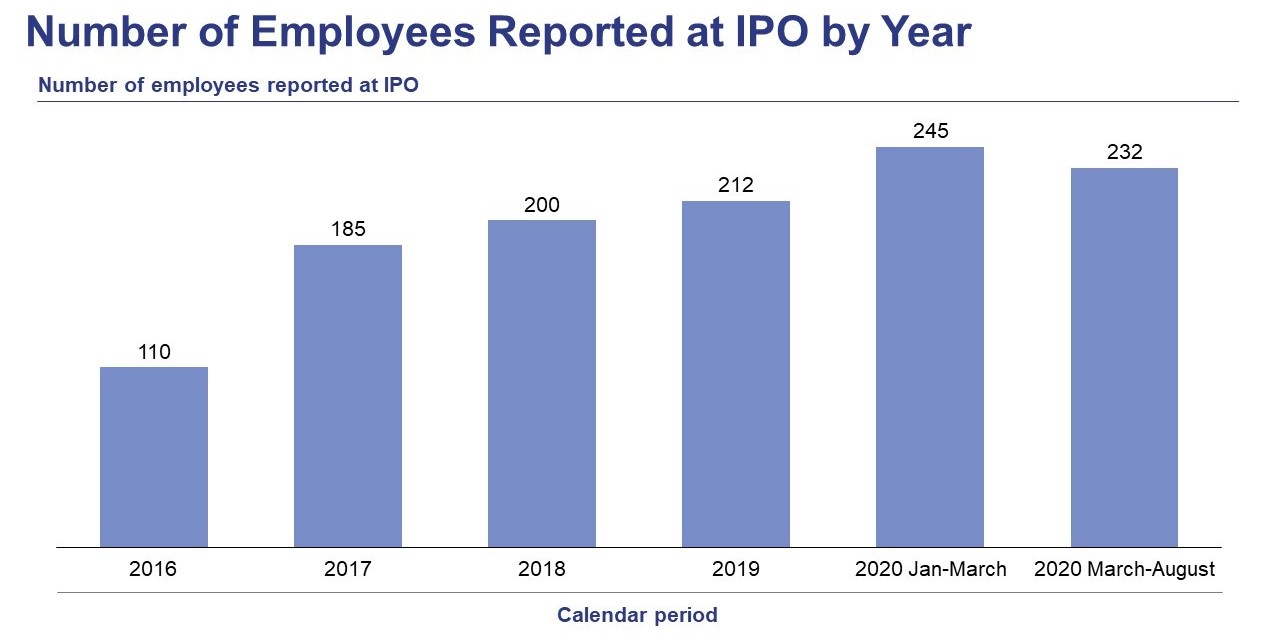
The IPO also revealed the number of dedicated staff working on EB-5 petitions—232 people. The figure is down 13 people from March 2020, but fortunately for those involved with EB5 investments, there hasn’t been a lot of attrition. Considering that United States Citizenship and Immigration Services (USCIS) was threatening to furlough around 70% of its staff in August 2020, EB-5 participants should be relieved to see most IPO staff have retained their jobs. Due to the COVID-19 pandemic, most of them have been completing their work from home since March 2020.

Most Questions Sidestepped

Unfortunately, the rest of the conference generally consisted of at best unfavorable news for EB-5 investors and other program stakeholders and at worst no news. The IPO masterfully sidestepped various pertinent issues and questions, rendering the presentation of little use to those with EB-5 investments.

Prior to the engagement, IIUSA drafted a list of questions to pose at the IPO conference, but the IPO’s response hardly inspired confidence. Ignoring the majority of the questions, the IPO offered little insight on the key EB-5 investment concerns of stakeholders during the turbulent times of 2020. In particular, the IPO ignored questions pertaining to the policy manual, changes to policy on the source and path of EB5 investment capital, country-based I-526 processing data, and changes to the redeployment policy.

Often, the questions the IPO did answer weren’t of much use to those in the EB-5 industry, either. Adopting a trick straight out of the “uncaring bureaucrat” playbook, the IPO regurgitated vague, publicly available information already published elsewhere instead of engaging with the questions presented. In this way, the IPO was able to avoid clarifying stakeholders’ uncertainties on such issues as the visa availability approach adopted in April 2020, processing times, and updates to the redeployment policy.

Finally, the IPO did not permit any interaction during the conference, leaving EB-5 stakeholders to stew in their disappointment without any opportunity to ask their pressing questions. Sarah Kendall made a live appearance during the IIUSA meeting, but there was no reason for it—given that she simply read off her talking points from the PDF and did not allow for questions, a prerecorded video would have made no difference.

Faster Processing Times for Previously Reviewed Projects

Though indirectly, the IPO did answer one question in the minds of many individuals with active EB5 investments: whether, under the visa availability approach, I-526 petitions from countries with available visas are assigned for adjudication on a first-in, first-out basis. It seems the most important factor after visa availability is whether USCIS has previously reviewed the EB-5 project, either via an exemplar I-924 petition or a previous EB-5 investor’s I-526 petition. This is in line with anecdotal accounts and creates an additional layer of inequality in the EB-5 process.

Processing Productivity Remains Low

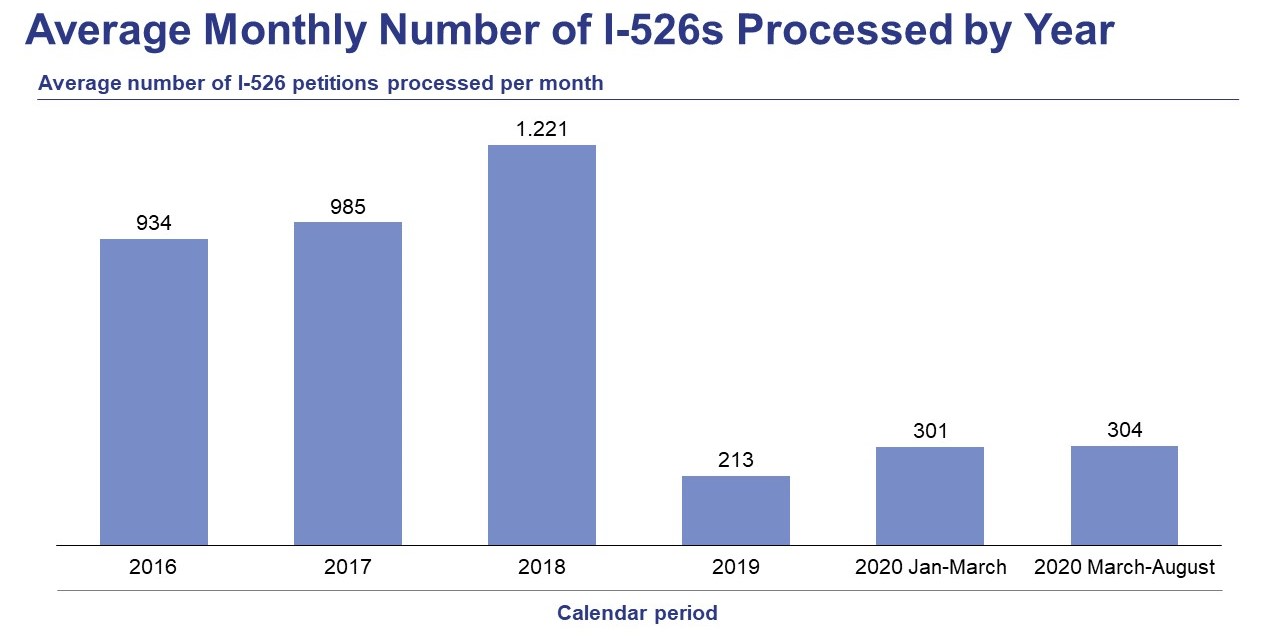
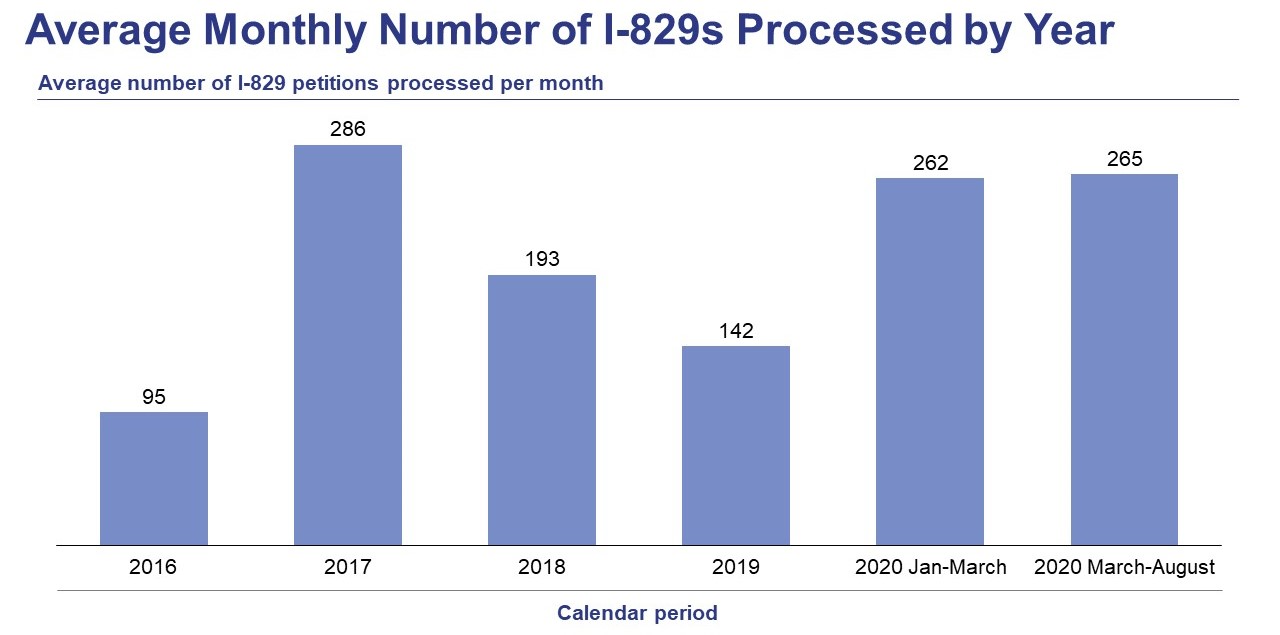
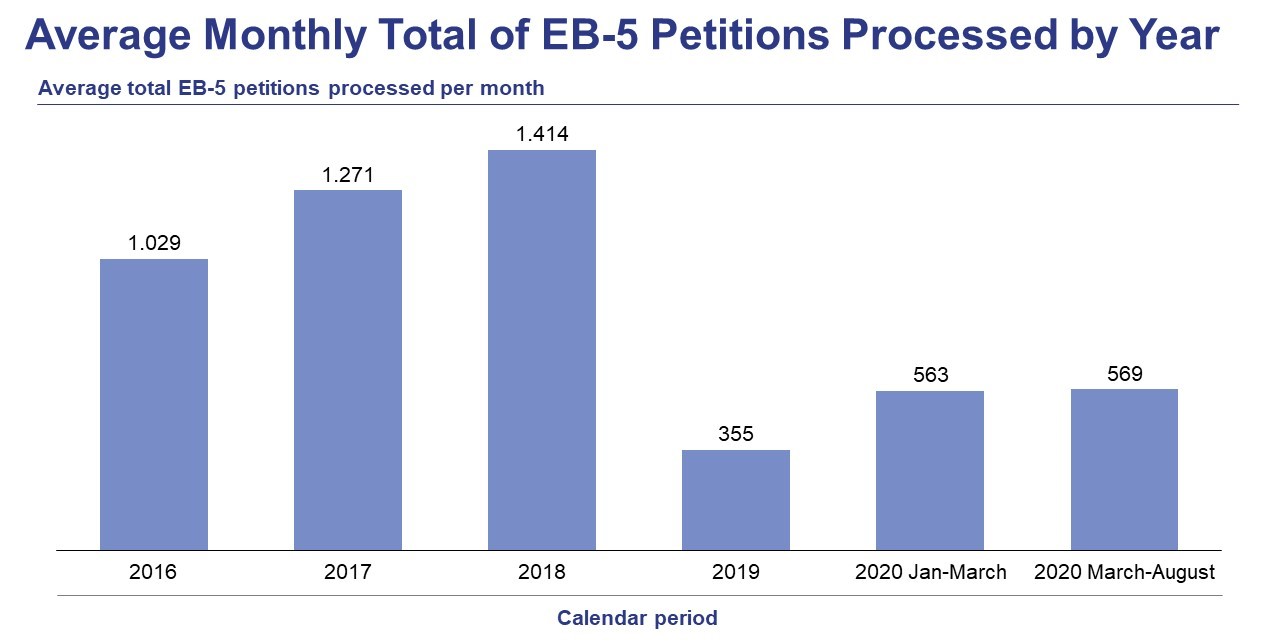
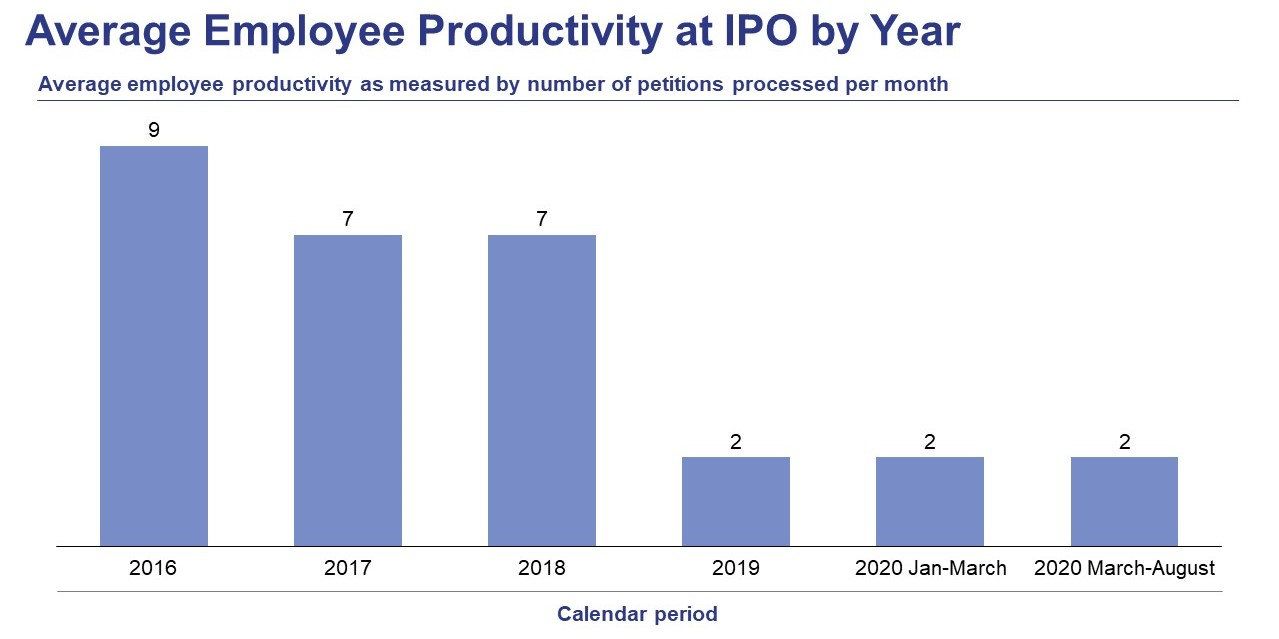
I-526 and I-829 processing has remained low since Sarah Kendall took over at the IPO, a stark contrast from the record-high productivity in FY2018 under her predecessor Julia Harrison. Updates from the IPO on processing data from March to August 2020 show this trend has been maintained well into 2020, with the IPO adjudicating a dismal average of 304 I-526 petitions and 265 I-829 petitions per month.

Not only did Kendall fail to increase productivity throughout FY2020, but she also failed to apologize for the astoundingly poor performance of the IPO under her watch, which is causing significant harm to the EB-5 industry. Furthermore, instead of predicting future increases in productivity, she highlighted the figures as favorable by comparing them to those of mid-2019, which recorded her lowest processing productivity figures. At this adjudication rate, foreign nationals who have made an EB-5 investment from a low-demand country will be waiting upwards of three years for adjudication, while investors from high-demand countries such as China or Vietnam could expect to wait more than five years.

The below graphs illustrate the effects of Sarah Kendall’s leadership of the IPO. It is evident that she is prioritizing I-829 petitions at the expense of I-526 petitions, stifling new interest in the program and impacting the ability of EB-5 project developers to reliably obtain EB-5 capital for their projects. The EB-5 industry can only hope productivity increases in FY2021.


Free EB-5 Project Evaluation

2020 Industry Trends and the Impact on Future EB-5 Immigration

2020-Industry-Trends-and-the-Impact-on-Future-EB5-Immigration.jpg

Immigration industry experts around the globe are taking time to hash out the myriad of challenges faced in recent years, how they impact this sector, and how they will likely continue to do so. In particular, the United States’ residency-by-investment initiative, the EB-5 Immigrant Investor Program, is expected to face its own unique set of challenges.

Regulatory updates rolled out in late 2019 coupled with the COVID-19 outbreak in early 2020 were some of the most significant catalysts for what have emerged as 2020 industry trends. Learn seven emerging EB-5 investment activity trends around the globe and understand the virus’s role in shaping them. Review the regulation changes implemented before the health and economic crises that ensued. Finally, take a look at how various actors participating in the program are following through.

All told, while it may seem like a volatile time for the EB-5 program, industry experts are holding on for the ride. They are confident that the shifts the industry makes in compensating for the challenges the program faced in FY2020 and will continue to face will only strengthen the program in the end.

Seven Global Trends Among EB-5 Investor Activities

There are a number of key observations from around the globe that industry experts have made in FY2020 that are likely to have significant impacts on immigration to the United States on the whole and specifically to the EB-5 Immigrant Investor Program going forward.

  • Latin America’s pandemic and currency issues have deflated EB-5 stakeholders’ hopes for the market.
  • Due to political strife between China and Hong Kong, investment activity wasn’t as strong from the special administrative region (SAR).
  • Recent years have shown Vietnam as a rising star in the EB-5 immigration sphere behind China’s waning EB-5 investment activity.
  • Although Vietnamese EB5 investment activities have generally begun to increase, the pandemic has curtailed much of the country’s investor undertakings (as to be expected).
  • South Korea is garnering a lot of industry attention for the activities of a handful of key migration agents and their work with a number of sub-agents, which haven’t appeared to be hampered by the pandemic.
  • Investors from Russia and others in the Commonwealth of Independent States in the region have shown a significant amount of interest in U.S. immigration programs
  • South Africa has been acknowledged as a likely up-and-coming EB5 investment player to keep an eye on.

COVID-19’s Role in 2020 EB-5 Industry Trends for the U.S.

The fact of the matter is, the COVID-19 pandemic led to a liquidity crisis to which very few people are immune. Naturally, this has drastically reduced the number of eligible EB-5 applicants who can readily allocate capital to an EB5 investment project.

Even the highest-net-worth candidates are re-evaluating their desires for residency in the United States. Ultimately, the impact the virus has had on EB-5 investors really depends on the market. Some foreign nationals are looking at the challenges the pandemic has caused within U.S. borders. Others are realizing they would prefer to have a place to go in times of crisis in their country of origin.

Another shift that may appear insignificant on its surface is that EB-5 program issuers have found it necessary to adjust their day-to-day business dealings to the digital space in a bigger way in the wake of the pandemic. A good example is marketing. Where program marketers used to be able to bring a project to market in a traditional way – person-to-person meetings, etc. – they’ve had to shift to a more digitized approach – think video conferencing, for instance. That said, there may be a long-term benefit to maintaining some of the digital shifts meant to temporarily aid in the continuation of their efforts.

By and large, public health and political issues seem to have propelled much of the EB-5 participant activity in 2020. However, these two catalysts aren’t the only ones impacting the industry.

Three Impacts of EB-5 Regulation Updates from November 2019

Enough time has passed since the EB-5 program regulation updates were implemented in November 2019 that several impacts have revealed themselves, including an increase in the amount of EB5 investment capital required to participate and stricter guidelines on targeted employment area (TEA) requirements, which have shifted the EB-5 investor pool in some notable ways.

Fewer, More Affluent EB-5 Investors

Sheer mathematics has led to fewer, more affluent investors. The minimum investment required to participate in the EB-5 investment program nearly doubled from $1 million to $1.8 million (or from $500,000 to $900,000 when investing in a TEA). Furthermore, some experts believe that fewer investors in the EB-5 program also means the necessary strengthening of the safeguards that protect them.

Greater Levels of Sophistication

Increased minimum EB5 investment amounts and increased safety measures have also yielded a seemingly more sophisticated group of participants. On the investor side, participants have paid greater attention to due diligence and investment safeguarding than in past years. As for stakeholders, there are fewer of them managing more of the business, which has heightened their stakes, bringing out higher levels of sophistication there as well.

Expansion of EB-5 Investments into Rural Areas

Stricter target employment area (TEA) requirements have disqualified most EB-5 projects that previously maintained TEA designation, while new geographical areas eligible for TEA status have opened up. Overall, these shifts have led to a greater percentage of investors infusing EB-5 capital into program-approved rural projects. Under new rules, EB-5 professionals are also getting creative with how to gain new TEA designation.

How EB-5 Project Developers Are Reacting to Regulation Changes

Advisors on the project development side are likely to begin counseling developers on effectively observing the market and rising to meet potential investors’ needs as opposed to simply putting together a project that works best for themselves. Some of the advice already surfacing on what a savvier EB-5 investment participant might be looking for when selecting a program-approved project includes topics such as:

  • Being able to meet tighter investment requirements like job creation and TEA designation
  • Guaranteeing I-526 completion and shoring up odds of approval
  • Having a clear understanding of the impact of COVID-19 on development in specific sectors like hospitality, travel, and retail

Over the long haul, experienced professionals in the residency-by-investment space around the globe will be eyeing individual markets and the shifting socioeconomic conditions investors face. This widening lens among investors and their counterparts is likely to result in increased competition against the United States from other strong residency candidates, like their neighbor to the north, Canada, or New Zealand.

President of LCR Capital Partners Joseph Haggenmiller made an important note to consider as well. He said that due to current political administration and rhetoric, the appeal among affluent families around the world of moving to the United States has waned. He believes the United States may not be a number one destination choice any longer. Changes are happening politically, however, and time will tell. The hope remains that a shift back to a more welcoming attitude toward immigration by the U.S. government would help repair the damage to the nation’s reputation as a dream destination to work, live, and raise a family.

What EB-5 Program Facilitators Can Expect in the Near Future

Ultimately, what is crystal clear for all of us working in the EB5 investment space is that the markets with economic stability are going to fare better sooner if they aren’t doing well already. Markets have never advanced on the same timeline in the history of the EB-5 investment program, and that fact remains the same now. Industry professionals are, however, saying that emerging and underdeveloped markets will likely face greater challenges in recovering from the impacts of the global pandemic. This means larger, better-developed foreign markets with more stable economies will be better target markets for EB-5 program participation in the interim.

In fact, many EB-5 professionals are already beginning to hedge their bets and batten down the hatches for a winter wave of the COVID-19 pandemic. Despite the challenges that seem to keep coming – global health and economic crises, tightened EB-5 investment requirements, the waning reputation of the United States in general – industry players remain hopeful. Stakeholders would do best to follow their lead as we in the industry continue to navigate ourselves to recovery.
Free EB-5 Project Evaluation

Federal Court’s Ruling Challenges USCIS’s Treatment of Guaranteed Redemptions

Federal-Courts-Ruling-Challenges-USCIS’s-Treatment-of-Guaranteed-Redemptions

The EB-5 Immigrant Investor Program is the pathway of choice to U.S. permanent resident status for foreign investors around the world, and while it is among the easiest and quickest routes to U.S. immigration, it still encompasses a myriad of requirements, such as the “at risk” requirement. EB-5 applicants must maintain their EB-5 investment capital at risk throughout the entire investment period to be considered for a green card. This does not mean that an EB5 investment must be risky—just that it must incur the possibility for gains as well as the risk for loss.

Given the “at risk” requirement, guaranteed redemptions are typically prohibited, and United States Citizenship and Immigration Services (USCIS) has denied numerous I-526 petitions for precisely that reason. However, not all guaranteed redemptions are actually free from risk—those that depend on the cash flow of the new commercial enterprise (NCE) still incur the risk for loss. Adopting this argumentation, Klasko Immigration Law Partners took USCIS to court over the denial of I-526 petitions that involved “put options”—the investor’s right to sell their EB5 investment back in the future.

The case was successful, with the court ruling in Klasko Law’s favor. The decision is monumental in that it effectively nullifies a portion of USCIS’s regulations regarding the “at risk” requirement. As the first such federal court decision, the ruling could spur a wave of appeals from similarly denied EB-5 investment participants and trigger a change to the official USCIS regulations.

What Was the Case?

Klasko represented five Chinese investors who had made EB5 investments in a senior living facility called Mirror Lake Village in rural Washington. As the petitions had included put options, USCIS had denied them on the grounds that the “investments did not qualify,” but the federal court ruled that the immigration body had failed to provide a reasonable justification for the denials and was operating under an unreasonable interpretation of “at risk.”

According to the Court of Appeals, the put options depended entirely on the cash flow of the project, and if the NCE failed to generate sufficient revenue, the investors would lose out. Similarly, if the NCE flourished, the investors would make gains on their EB5 investments—thus, the investments included both the opportunity of profit and the risk of loss.

USCIS’s Judgment Dubbed an Error

U.S. Circuit Judge Merrick Garland considered USCIS to have erred in its interpretation of its own definition of “at risk.” USCIS requires an EB-5 investment to include the possibility for both gain and loss, but in the denials of these Chinese investors, the adjudicators seem to have judged the possibility for gain as a negation of the possibility of loss. Garland noted how the interpretation directly contradicts USCIS’s own definition of “at risk,” adding that if the possibility of success always negated the possibility of failure, no stock investment would ever be considered “at risk” because there is always the possibility of a business succeeding.

USCIS defended its decision by citing Matter of Izummi, which stipulates that redemption agreements are prohibited. The federal court overturned the immigration agency’s overly broad interpretation of the matter by ruling that the prohibition can only apply to redemption agreements that incur no risk of loss. Redemption agreements contingent on the NCE’s success are, by definition, subject to risk, as a business is never guaranteed to succeed.

The USCIS Policy Manual directly states that redemptions need not be guaranteed to constitute an impermissible EB-5 investment by EB-5 regulations. Instead, the mere fact of the investor having a right to demand a repurchase is, according to the USCIS Policy Manual, impermissible. This passage sheds light on the adjudicators’ decisions, but ultimately, the federal court’s decision overpowers that of USCIS. In this way, the court ruling essentially voids much of USCIS’s regulations regarding redemptions.

In light of the court decision, changes to the regulations could be coming in the future, as USCIS faces the possibility of further appeals from EB-5 investors rejected in similar circumstances. The court decision reignites hopes for a life in the United States of numerous investors who believe their dreams have been dashed unjustly.