

Author Archives: admineb5

Free EB-5 Project Evaluation

Should you file an I-924 “Exemplar” Petition before September 30th?

Since the introduction on June 3, 2015 of the bipartisan American Job Creation and Investment Promotion Reform Act by Senators Patrick Leahy (D-Vt.) and Chuck Grassley (R-Iowa) the Grassley / Leahy Bill, there is increased discussion on whether potential projects should file an I-924 “exemplar” petition prior to September 30th, 2015, the date on which the Regional Center program is set to expire, and the impetus for the bill. While most EB-5 practitioners understand that changes to the program are imminent, there remains debate on what actions are most prudent to pursue in the short term to address the upcoming changes.

While a detailed description of the changes are beyond the scope of this article, there are several key provisions in the currently proposed bill that should impact the decision on filing an I-924 Exemplar prior to the approval of any legislation:

(1) Proposed Increase in the minimum per investor amounts from $500K to $800K for TEAs and $1M to $1.2M in non-TEAs;

(2) Proposed changes to the definition of TEA, including prohibiting the aggregation of census tracts by limited TEA status to only a single-census tract;

(3) Proposed changes to what sources of capital may count towards job creation numbers;

(4) Proposed changes to the number of direct versus indirect jobs may be counted towards each person’s 10 job requirement;

(5) Proposed requirement that future projects must have an approved I-924 Exemplar before any investor’s I-526 Petition can be filed with respect to that project.

When deciding whether to file an I-924 Exemplar the project should go through a list and evaluate several criteria.

(1) Is the project at a stage where sufficient facts exist to support an I-924 Exemplar ?

(2) Does the project work today from a job creation and TEA standpoint?

(3) Can the team fully assemble the required documentation prior to September 30th, or whenever the bill is passed? It is important to note that the trigger for the new changes will be the effective date of the proposed bill, which could be prior to the end of September or after September if there is an extension.

(4) Do your offering documents include sufficient disclosure on the proposed legislation and its potential effects and risk factors?

The above are some of the key questions a sponsor should consider prior to filing for an I-924 Exemplar. If the above can be met the value of an I-924 Exemplar filing is very clear.

The key benefits to filing an I-924 Exemplar now rather than waiting for any changes to the legislation include:

(1) Grandfathering-in the existing definition of TEA

(2) Grandfathering-in the minimum investment amount of $500,000 in a TEA

(3) Grandfathering-in the existing way that jobs are calculated and how sources of capital are used for job creation

(4) The ability to bring the project to market and fundraise prior to I-924 Exemplar approval

These key benefits above make it extremely clear that if the project is in the position where an I-924 Exemplar could be filed before September 30th, then it is highly advantageous to do so. The best path forward is to file the I-924 Exemplar petition with an already approved Regional Center to ensure that the project sponsor can bring the project to market prior to USCIS I-924 Exemplar approval after the new regulations come into effect.

By “locking in” a project under the existing requirements and definitions, the project will be positioned for fund raising success, particularly as existing projects become scarce. We predict that there will be high demand for any high quality project that has grandfathered in the lower investment amount and the easier to use TEA definition.

Our recommendation is that any projects serious about using EB-5 funding should consider filing an I-924 Exemplar prior to the approval of any pending legislation, currently due to be passed in some form or another by September 30th. However, the decision for a project sponsor to file for I-924 Exemplar will be heavily project specific.

Please contact us at www.EB5AffiliateNetwork.com or 1-800-288-9138 to discuss further.
Free EB-5 Project Evaluation

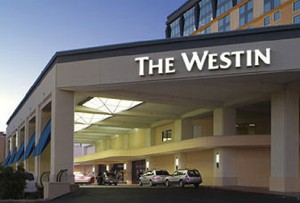
Why are Hotel Projects so Popular for EB5 Regional Centers?

Why are Hotel Construction Projects so Popular for EB5 Regional Centers?

New hotel construction is one of the most popular types of EB5 regional center investment today. The reasons behind this relate to the two primary goals for EB5 investors:

(1) Obtaining a Visa (with the highest chance of it becoming permanent) and

(2) Return of Investment Principal

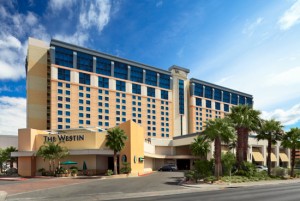
Westinwestin-casuarina

Compared with other types of new real estate development projects, Hotel projects tend to create a high number of jobs per dollars invested given the construction spend and ongoing operations drivers of job creation. An increased number of jobs for the entire project translates into more jobs available on a per investor basis, and thus greater likelihood that the investor will receive a permanent Visa.

New hotels create substantial direct jobs during the operational phase and during the construction phase if construction lasts more than 24 months, and the USCIS Regional Center program allows projects to also count “indirect and induced” jobs determined through economic models such as RIMS II and Implan, approved by USCIS economists. EB-5 regional center investment projects can therefore take advantage of indirect and induced jobs created during both the construction phase (if longer than 24 months) and during the operational phase once construction is completed the hotel is operational.

In most deals today, EB-5 investor capital represents a small portion of the total capital required, but all project capital can be counted for the purposes of EB-5 investor job creation.

To illustrate, let’s say that a new hotel development project has a total of $100 million hard and soft construction budget which will create 900 direct and indirect jobs using USCIS approved economic models. Of this amount, 30% or $30M is from 60 EB-5 investors each contributing $500,000. This means that all 900 jobs can be divided on a pro-rata basis so that each of the 60 investors is allocated 15 jobs (900 jobs / 60 investors). This represents a “job cushion” of approximately 50 percent over the USCIS required 10 jobs per investor (15 vs 10 jobs). Investors who choose to invest in projects with a “job cushion” have a greater likelihood of their temporarily approved Visa’s becoming permanent at the I-829 stage years later.

Temporary Visa’s are made permanent by the USCIS after an investor has demonstrated that a minimum of 10 jobs over 2 years has actually been created by his/her investment in the EB-5 project. If the total construction spend decreased during the course of the project or the amount of operational revenue expected from the project was lower than expected, the number of jobs created by the project would be lower than projected.

Investors who select projects where there is no “job cushion” may run into issues at I-829 approval if the project they invested in did not create the required number of 10 jobs over 2 years after the decreases in construction spend and operational revenue were taken into account.

Therefore, investors considering an investment in an EB-5 project should always take into account not only the projected total job creation of the project, but also the “job cushion” to maximize the likelihood of receiving a permanent Visa as a result of their investment.

From a revenue perspective, hotel projects are also perceived to be relatively safe in the marketplace for return of capital compared with other EB-5 project types. Most foreign investors believe that they understand the revenue model of a hotel, and are confident that they can recognize a quality location that they recognize and a well-respected hotel brand/operator associated with a given project.

Due to our extensive experience in the hotel space, EB5AN has developed proprietary legal and economic structures for EB5 hotel projects under regional centers looking to raise EB5 investment capital. Our team has worked with major hotel development companies and international hotel brands on projects across the United States.

Free EB-5 Project Evaluation

USCIS Operations Insights from a Leading I-924 Documentation Service Provider

There is very little public information on the inner-workings of USCIS and more specifically on USCIS’ EB-5 program adjudication process. Each time a prospective Regional Center submits an I-924 application it feels a bit like the application is going into a black box, where it could be adjudicated within a few months or it may not be looked at for nearly a year.

EB5AN has observed the application process from a unique angle – after submitting over a dozen regional center applications, all with a similar level of rigor in document preparation, we have been able to observe some of the various paths applications go through when being adjudicated by USCIS.

Earlier this year we submitted several I-924 applications within a few weeks of each other. From outside observation, we could tell each application went to a different “team” within USCIS. Each of these teams processed the applications very differently, with key differences including: time for initial review, length of review, focus of RFE’s, and the quantity and extensiveness of RFE’s.

Based on our extensive experience we have been able to gain some useful strategies to leverage when applying for new regional centers, even those with expansive geographic coverage. One of the things we have learned is that having substantial and in-depth evidence across the entire geographic area is a necessity for approval for the larger county group. The most critical additional analysis is related to the business plan / operations plan and the detailed job impact analysis. Multiple detailed local analyses are needed for larger geographic areas.

Due to our experience EB5AN has developed unique approaches to I-924 applications based on our extensive experience working with USCIS in the Regional Center application process. Going forward we will continue to monitor the processing times and tendencies based on our application volume and continue to gain insight from their operations.

Free EB-5 Project Evaluation

Implications of EB-5 Visa Retrogression

While the mechanics of visa retrogression on a per-country basis are complex, the reality is that there are only 10,000 visas available in the EB-5 category each USCIS fiscal year. Since an average of approximately two family members apply alongside each investor, USCIS can approve 3,300 EB-5 visas each fiscal year.

However, as of May 2019, around13,500 I-526 petitions 500I-526 petitionsare pending with USCIS. Therefore, it is likely that the current fiscal year’s visas will be exhausted by investors whose petitions are currently pending, and investors submitting I-526 petitions this year could face delays of over 12 months. In fact, predicted wait times each extend to several years for countries facing higher demand.

Given this change, the market standard escrow release terms for EB-5 projects are changing to allow for earlier release of investor capital before I-526 approval. This is simply a matter of timing and realistic waiting time for EB-5 projects, of which the vast majority cannot deal with funding uncertainty in the 12- to 24-month range.

To learn more about EB5AN and how we work together with partners to assemble best-in-class EB-5 projects, please call us directly at 1-800-288-9138.

Free EB-5 Project Evaluation

Impact of Current EB-5 Processing Times

On October 24, 2014, USCIS released an updated EB-5 Processing Report of average processing times for the Immigrant Investor Program Office as of August 31, 2014. This recent report indicates that current average processing times are 13.8 months for Form I-526 (Immigrant Petition for Alien Entrepreneur); 7.2 months for Form I-829 (Petition by Entrepreneur to Remove Conditions), and 8.1 months for Form I-924 (Application for Regional Center Under the Immigrant Investor Pilot Program).

It is important to note that these figures are averages and that EB5AN has seen processing times both significantly shorter and longer on all forms. For example, our experience completing numerous economic impact reports and regional center applications throughout the United States shows us that I-924 applications filled for smaller regions (<10 counties) tend to be approved faster than average, whereas larger tracts of coverage typically require more approval time. Although this is the norm there are exceptions and it is difficult to predict processing times with any certainty.

From an availability of capital perspective, since current I-526 forms are taking around 13 months for individual investor approval, we are seeing a shift in the marketplace in escrow terms. Both the timing and amount of capital available upon release are adjusting to reflect delays in processing times. For example, during periods where I-526 application processing times have been shorter, projects in the marketplace have structured escrow agreements such that investor funds drop into the project’s operating account (out of escrow) on each individual investor’s I-526 approval. Now that USCIS processing times have increased, we are seeing a movement toward a range of early release investment structures. A few examples of these structures include: (i) 80/20 capital releases on submission and (ii) full capital release for all investors on the first investor’s I-526 approval.

(i)             80/20 capital releases on submission: With this structure, the investor’s funds are put into escrow and then 80% of the funds are directly released into the project’s operating account upon I-526 submission with the remaining 20% held back in escrow until that individual’s I-526 application has been approved by USCIS. This method of early release is becoming more widespread as many projects cannot wait over a year for money to become available out of escrow. The logic behind this structure is that historically USCIS has had an I-526 denial rate of well below 20% and so the idea is that with multiple investors in a given project, if one investor’s I-526 petition is denied, then there will be at least 4 investors in the same project who successfully obtain I-526 approval.

(ii)           Full capital release for all investors on first I-526 approval: With this structure, all of the investor’s funds for a project are held in escrow until the first investor in the group gains I-526 approval. When this occurs, this event serves as a trigger for the remaining investor’s capital held in escrow to drop out of escrow and into the project’s operating account. There can also be holdbacks included in this to create reserves for any denials.

To learn more about EB5AN and how we work together with partners to assemble best in class EB-5 projects, please visit our website at www.EB5AffiliateNetwork.com or call us directly at 1-800-288-9138.