



If you are an EB-5 investor, understanding how the Reform and Integrity Act of 2022 (RIA) affects petition processing is important. The law not only changed how regional centers operate but also created a new framework for how quickly investors’ cases move through the system.
To understand how USCIS now processes petitions, you first need to know what the RIA changed. Then, you can better see how it impacts your investment choice and what it means for your immigration timeline. Whether you are already invested in an EB-5 project or planning to start, knowing how these changes work will help you make informed decisions and manage your expectations.
In this article, we will explore how USCIS processes EB-5 petitions under the RIA and what these developments mean for you as an investor.
Understanding What the RIA Introduced
The Implication of the RIA on Petition Processing
Why Rural EB-5 Petitions Receive Faster Approvals
What Does This Mean for You?
- If You Have Already Invested in a Rural Project
- If You Have Already Invested in an Urban Project
- If You’re a Prospective Investor
Achieve Faster EB-5 Results With EB5AN
Understanding What the RIA Introduced
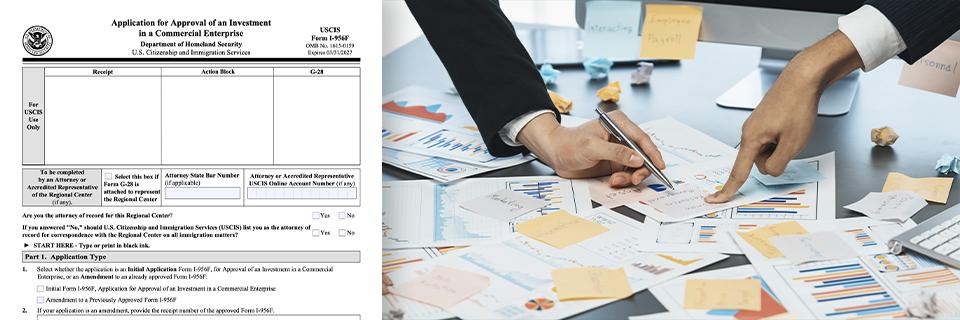
Before the Reform and Integrity Act (RIA), the EB-5 program had certain inconsistencies. The adjudication process lacked clear standards, which created unpredictable outcomes. To address these issues, the RIA codified the following clear standards for investors and their petitions.
- Form I-956F filing: This document provides USCIS with the information it needs regarding the EB-5 offering, such as its business plan. It also includes background details on the individuals who will have significant involvement in the project and its business.
- Detailed job forecasts: The RIA dictates that project and investor petitions include detailed job forecasts and capital deployment plans. This documentation shows USCIS that investors’ funds will be used to create the jobs required to qualify for permanent residency.
- Rigorous source of funds documentation: The RIA established more rigorous documentation standards for source of funds tracking to ensure that the funds used in EB-5 projects come from legitimate sources.
These changes might seem demanding, but they have improved the quality of filings. As a result, petitions are better prepared and easier to review, leading to higher approval rates and more predictability for investors, regional centers, and immigration attorneys.
The Implication of the RIA on Petition Processing
Since the RIA’s implementation, USCIS data have shown remarkable changes in petition progress, leading to the following outcomes:
1. Increased Approval Rate
According to USCIS data spanning from April 2022 through January 2025, the overall approval rate for I-526E petitions is approximately 97%. This was an unprecedented figure and suggests that the changes introduced under the RIA have substantially improved the quality of submissions. It’s worth noting that this percentage may drop slightly once pending requests for evidence and notices of intent to deny are resolved. However, even after accounting for potential denials, approval rates remain significantly higher than in the pre-RIA era.
2. Rural Projects Are Now the Priority
The law mandates that USCIS must process rural investment petitions before equivalently timed petitions in other categories, and the latest data confirms this is happening in practice. From April 2022 to January 2025, 1,100+ rural petitions were adjudicated, representing approximately 27% of all rural filings. Over the same time period, only 361 urban petitions were adjudicated, just approximately 7% of all urban filings. Despite more urban petitions being filed over this span, nearly three times as many rural petitions were processed.
The numbers are even more pronounced when we narrow our focus. From February 2023 to January 2025, USCIS adjudicated 967 rural petitions (24% of all filings), while only 74 urban petitions (1.5%) were processed. That’s a 13:1 ratio in favor of rural processing. Clearly, USCIS is upholding the RIA’s mandate, as rural projects are being pushed to the front of the line.
As of March 30, 2026, USCIS formalized its processing approach under a FIFO system, where rural petitions are still assigned first but only up to anticipated fiscal year rural visa usage, after which other categories follow in filing order.
Why Rural EB-5 Petitions Receive Faster Approvals
Priority processing under the RIA is one key reason rural petitions are being handled faster, but it is not the only factor. Rural petitions have twice the yearly quota compared to their urban counterparts. The RIA sets aside 20% of all EB-5 visas for rural investors, whereas only 10% is set aside for urban investors.
What Does This Mean for You?
The new EB-5 landscape shaped by the RIA affects all investors differently in the following ways, depending on your current or planned investment:
If You Have Already Invested in a Rural Project
You’re in the strongest position because of faster processing and higher odds of timely Green Card issuance. At this stage, your main focus should be to monitor your petition and investment carefully. Additionally, stay informed about updates from your regional center and confirm that the project remains compliant.
If You Have Already Invested in an Urban Project
Urban investors, particularly those with a stalled application, should consider speaking to an immigration attorney about the possibility of a mandamus filing to compel USCIS to act. You should also check each monthly Visa Bulletin to make sure your category remains current. It is also a good idea to maintain clear communication with your regional center.
If You’re a Prospective Investor
You should strongly consider opting for a rural project if your place of birth is China or India. In fact, recent data shows that more than half of all Chinese EB-5 filings (52%) and nearly half of Indian filings (47%), since the RIA became law, have gone into rural projects. Considering that these are investors from countries that have historically faced greater waiting times due to the high visa demand, it is clear that people recognize that rural investments currently offer the most efficient path to permanent residency. However, keep in mind that not all rural projects are created equal. This is why you should prioritize projects that come from regional centers with a strong track record of compliance.
Achieve Faster EB-5 Results With EB5AN

The RIA has reshaped how USCIS processes EB-5 petitions by ensuring they prioritize rural projects, which has led to faster approvals in that category. As an investor, this change gives you a strategic advantage. But do not forget that choosing the right partner is just as important as choosing the right project.
EB5AN has helped more than 2,700 families from 70+ countries become lawful permanent residents of the United States. Our expert team has more than a decade of experience and offers clients first-rate, low-risk EB-5 regional center projects with a 100% USCIS project approval rate.
If you would like to know more about your EB-5 investment options, book a free call with us today.